Why Semi Equipment ETFs Continue to Outperform Foundry ETFs – A Deep Attribution Analysis
In recent years, exchange‑traded funds (ETFs) focused on semiconductor equipment makers have tended to outperform those centered on foundries and chip manufacturers. This pattern has persisted across multiple market cycles, surprising some investors who assume that the companies producing finished chips should capture the greatest share of value. A closer look reveals that equipment makers occupy a structurally advantaged position in the semiconductor ecosystem, translating into relatively resilient earnings, powerful operating leverage, and compelling long‑term growth narratives.
This blog post offers a deep attribution analysis of why semi equipment ETFs continue to outperform foundry ETFs. It breaks down the drivers into structural industry dynamics, revenue and margin profiles, capital cycle timing, geographic and customer diversification, and thematic exposure to emerging technologies. While every ETF has its own holdings and nuances, the broader relationships described here help explain the performance gap between equipment‑focused and foundry‑focused strategies.
Understanding the ETF structures
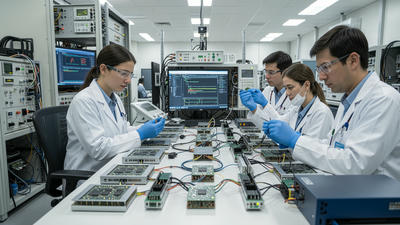
Semi equipment ETFs primarily hold companies that design and manufacture tools used in wafer fabrication and packaging: lithography systems, etch and deposition tools, inspection and metrology platforms, cleaning and CMP equipment, and back‑end assembly and test machinery. These firms sell capital equipment to foundries, integrated device manufacturers (IDMs), memory makers, and OSATs.
Foundry ETFs, in contrast, are dominated by pure‑play contract manufacturers and sometimes selected IDMs. Their revenues come from wafer processing services: turning silicon wafers and process technology into chips for fabless designers and system companies. Foundry profitability is highly sensitive to wafer demand, average selling prices, and capacity utilization.
This fundamental distinction—tool providers versus capacity providers—underpins many of the attribution factors that drive relative ETF performance over time.
Structural positioning in the value chain

Equipment makers sit upstream in the semiconductor value chain. They provide the essential tools without which no chips can be produced, regardless of end demand. While foundries compete on price, performance, and technology, equipment makers compete on enabling those technologies and efficiencies at scale.
This upstream role gives equipment companies exposure to broad, long‑term trends in semiconductor growth rather than to specific product cycles alone. When the industry invests in new fabs, node migrations, and capacity expansions, equipment makers benefit across multiple customers and regions, converting structural growth into tool demand.
Foundries, by contrast, are more tightly bound to the immediate balance of supply and demand in wafers. Their fortunes can swing more sharply with inventory cycles, pricing pressure, and shifts in customer mix, contributing to greater earnings volatility and periods of relative underperformance.
Capital expenditure cycles and timing advantages
Semi equipment revenues are directly tied to capital expenditure (capex) cycles. When chipmakers ramp up investment in new fabs or upgrade existing lines, they place large orders for equipment long before the fabs reach full production. This means equipment firms typically experience demand upswings earlier in the cycle than foundries do.
During downturns, capex may be cut, but certain strategic projects—advanced nodes, critical infrastructure, and regionally supported capacity expansions—often proceed, softening the blow. In upturns, pent‑up demand and multi‑year expansion plans generate strong, sustained tool orders, anchoring equipment ETFs’ growth profiles.
Foundries, on the other hand, feel the effects of capex decisions differently. Their profits lag capex cycles; they must ramp utilization and secure pricing power to turn previously invested capital into returns. This timing difference can cause equipment ETFs to lead performance in emerging upcycles and to hold up better during transitional periods.
Revenue diversification and customer breadth

Equipment companies tend to sell to a wide range of customers: leading logic foundries, memory manufacturers, IDMs, specialty device makers, and packaging houses, often across multiple continents. A single tool platform can be deployed in numerous fabs and nodes, diversifying revenue streams.
Foundries, especially the largest ones, may rely heavily on a concentrated set of customers—top CPU, GPU, and mobile chip designers—and on a limited number of technology nodes. While this can be advantageous when those customers and nodes are booming, it also magnifies exposure to individual client decisions, competitive dynamics, and node‑specific downturns.
From an ETF perspective, this diversification means equipment baskets often contain companies whose end‑markets span many segments—logic, memory, analog, power, and packaging—providing more balanced exposure than foundry baskets tied to particular mixes of customers and technologies.
Operating leverage and margin structures
Equipment makers typically pursue high‑value, high‑margin products. Once a tool platform is developed and industrialized, incremental unit sales can carry attractive margins, especially when the platform becomes an industry standard. Service, spare parts, and software updates add recurring revenue with strong profitability.
Foundries operate capital‑intensive manufacturing businesses with large fixed costs: depreciation, labor, utilities, and materials. Their margins depend on maintaining high utilization and securing favorable pricing. When utilization drops, margins compress quickly; when competition intensifies or customers negotiate aggressively, pricing pressure can erode profitability even at full load.
This difference in margin profiles and operating leverage often translates into smoother earnings trajectories and higher average profitability for equipment firms, supporting stronger valuations and ETF performance relative to foundry peers over extended periods.
Technology intensity and R&D defensibility
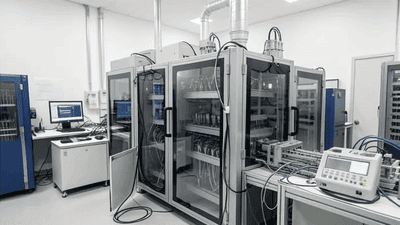
Many equipment companies occupy niches with high technical barriers to entry: advanced lithography optics, high‑aspect‑ratio etch chambers, atomic‑layer deposition reactors, and sophisticated inspection and metrology systems. Developing competitive tools in these domains requires substantial R&D, long qualification cycles, and deep process know‑how.
Once established, these technical moats can be durable. Customers are reluctant to switch away from proven platforms due to risk, retraining costs, and process revalidation requirements. Equipment vendors thus enjoy a degree of quasi‑monopolistic or oligopolistic positioning in specific tool categories.
Foundries also invest heavily in R&D, but their technology is more visible and subject to direct competitive comparison. They vie for design wins and volume in specific nodes, and their process advantages can be time‑limited as rivals catch up. This more direct competitive exposure can lead to fiercer pricing and margin competition, contributing to more variable ETF returns.
Aftermarket and service revenues
Equipment makers derive significant income from aftermarket services: maintenance contracts, tool upgrades, spare parts, and process optimization support. Once installed, complex tools require ongoing attention. This service layer provides relatively stable, recurring revenue that can cushion cyclical swings in new tool sales.
Foundries certainly have recurring revenue from wafer orders, but their contracts are more sensitive to business cycles and customer behavior. They are not selling “service on tools” but “capacity and technology,” which can be curtailed or shifted as customers adjust their production strategies.
In ETF attribution, the presence of sizable service and recurring revenue streams in equipment holdings supports more consistent cash flows and can justify higher valuation multiples, contributing to outperformance relative to more cyclically exposed foundry holdings.
Exposure to multi‑node and multi‑segment growth themes
Equipment ETFs are naturally leveraged to broad growth themes: node migrations to ever‑smaller geometries, adoption of 3D NAND and other vertical architectures, expansion of wide‑bandgap power devices, and the rise of advanced packaging (chiplets, 2.5D, 3D stacking). Each of these themes requires new or upgraded tools.
Foundry ETFs, while exposed to some of these same trends, concentrate more on the economic performance of fabs implementing them. Their fortunes depend on capacity utilization, customer mix, and pricing as much as on technological adoption per se.
When markets price in multi‑year technology transitions and structural demand—AI data centers, automotive electrification, edge computing—they often reward equipment firms for their role as enablers across segments and nodes, boosting equipment ETF performance relative to foundry ETFs that may be perceived as more tied to specific product cycles.
Geopolitics, reshoring, and fab build‑outs
Geopolitical dynamics and reshoring initiatives have spurred large‑scale fab construction plans in several regions. Public funding, tax incentives, and policy support aim to build or expand local manufacturing capacity. Equipment makers are direct beneficiaries of these build‑outs, as every new fab and line requires a full complement of tools.
Foundries certainly benefit from subsidies and incentives, but they also face regulatory scrutiny, local competition, and complex negotiations over long‑term commitments. Their earnings trajectories can be more influenced by how quickly and profitably new capacity can be filled, not merely by its existence.
ETF attribution reflects this difference: equipment baskets capture the capex boom in relatively straightforward fashion, while foundry baskets must navigate the more nuanced and uncertain path from subsidized capacity to sustained profitable operations.
Risk profiles: cyclicality versus structural growth
Both equipment and foundry businesses are cyclical, but the nature of their cycles differs. Equipment orders can be lumpy, tied to large projects, yet the underlying driver is structural growth in global semiconductor capacity and technology evolution. Foundry revenues are more directly correlated with consumer and enterprise demand for chips, including short‑term swings in PCs, smartphones, and other markets.
When capital markets focus on long‑term structural growth themes—digitalization, AI, cloud, electrification—they may favor equipment ETFs that appear to be more directly and consistently aligned with those themes, while treating foundry ETFs as more subject to shorter‑term product cycles and inventory corrections.
This perception can lead to a performance gap even if both segments ultimately benefit from the same macro trends, simply because investors assign different risk premiums and growth expectations to equipment versus foundry exposures.
Valuation dynamics and multiple expansion
Outperformance is not just about earnings; it is also about valuation multiples. Semi equipment companies have increasingly been viewed as high‑quality industrial technology firms, with durable moats, recurring service revenues, and strong structural demand. As a result, their price‑to‑earnings or EV/EBITDA multiples have expanded in many cases.
Foundries, while critical, often face questions around capital intensity, pricing power, and the sustainability of margins at peak cycles. Markets may assign them somewhat lower multiples, viewing their earnings as more volatile and their competitive positions as more contested, particularly when new entrants or capacity expansions loom.
For ETFs, these valuation dynamics mean that equipment baskets can outperform not only because earnings grow, but also because investors are willing to pay more for each unit of earnings over time. Foundry baskets may see more muted multiple expansion or even compression during certain phases, limiting relative performance.
Attribution in practice: what drives relative returns
A deep attribution analysis of ETF performance would break down relative returns into factors such as sector allocation, stock selection within each category, factor exposures (growth, value, quality, momentum), and regional weights. In broad strokes, semi equipment ETFs often benefit from:
Higher exposure to “quality” metrics—strong balance sheets, consistent margins, recurring revenues from services and installed base support. Greater alignment with “growth” themes—capex cycles, technology transitions, and multi‑segment demand for new tools. Beneficial regional and customer diversification across logic, memory, analog, and packaging customers in several geographies.
Foundry ETFs may have higher sensitivity to cyclical demand and macro factors, and while they can outperform during strong upswings in wafer demand and pricing, their aggregate factor profile often appears more volatile, leading to less consistent outperformance over multi‑year windows compared to equipment ETFs.
Investor implications: portfolio construction and risk management
For investors, understanding why semi equipment ETFs have outperformed foundry ETFs can inform portfolio construction. Equipment‑focused funds may be better suited to express long‑term confidence in semiconductor growth and technology evolution, offering diversified exposure to the tools that enable those trends.
Foundry‑focused ETFs can play complementary roles, providing more direct exposure to chip manufacturing economics and specific cycles in logic and memory. However, their use may require more active timing and risk management, given their greater sensitivity to short‑term demand and pricing dynamics.
Blending both types of ETFs can create a more balanced semiconductor allocation, capturing structural equipment upside and cyclical foundry opportunities, while diversifying across business models and value chain positions.
Conclusion: equipment as the leverage point of the semi cycle
Semi equipment ETFs have continued to outperform foundry ETFs because equipment companies occupy a unique leverage point in the semiconductor cycle. They sell essential tools to a broad set of customers, benefit directly from capex and technology transitions, and often enjoy strong margins, recurring revenues, and defensible R&D moats.
Foundries, while indispensable, face a different mix of risks and rewards: high capital intensity, competitive pricing pressures, and tight coupling to immediate chip demand cycles. Over extended periods, these differences have translated into distinct performance profiles, with equipment ETFs frequently leading. For investors seeking deep exposure to the structural growth of semiconductors, understanding this attribution is key to designing strategies that align with both the physics and the economics of how the industry moves forward.