



Latest Articles





Featured Articles
 Macro Cycle
Intensifying Semi Sector Divergence: The Trilogy of Analog, Digital, and Power
The semiconductor industry is no longer a single, unified story. Instead, it is increasingly a trilogy—three distinct but interdependent sectors whose economics, technology roadmaps, and demand cycles are diverging: analog, digital, and power. On the surface, all three deal with silicon and electrons; in practice, they respond to different customer needs, move at different speeds, and face different constraints.
 Macro Cycle
R&D Intensity Ranking in Semis: Who Keeps Doubling Down on the Future?
In semiconductors, research and development is not just a line item—it is the engine that determines who sets the pace of technology and who follows. R&D intensity, usually measured as R&D spending as a percentage of revenue, reveals how aggressively companies are investing in their future versus harvesting their present.
 Macro Cycle
Interpreting the Sentiment Signal as Wafer Fab Utilization Breaches 85%
Wafer fab utilization is one of the semiconductor industry's most closely watched operational metrics. When utilization climbs above key thresholds, it has ripple effects across pricing, lead times, equipment demand, supplier margins, and market sentiment.
 Macro Cycle
Japan’s Semi Renaissance: Joint 2nm R&D Progress Among 8 Major Giants
Japan’s semiconductor industry is experiencing a genuine renaissance. After decades in which the country’s role shifted from dominant memory and logic supplier to more specialized niches in equipment, materials, and certain devices, a new wave of coordinated effort is pushing Japan back toward the leading edge of process technology.
 Macro Cycle
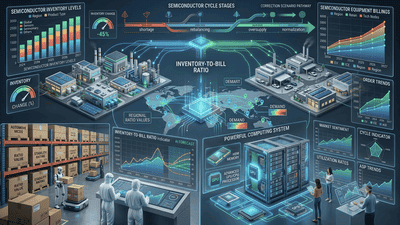
Practical Application of the Inventory-to-Bill Ratio in Semi Industry
Semiconductor executives and investors spend a lot of time staring at numbers, but not all metrics are equally useful for understanding where the cycle is heading. Among the more practical indicators is the inventory‑to‑bill ratio: a simple comparison of how much product is sitting in stock versus how much is actually being billed to customers over a given period.
 Macro Cycle
Semi Inventory Days Drop Below 90, Restocking Cycle Officially Begins
When semiconductor industry inventory days fall below the 90-day threshold, it’s more than a statistic — it’s a signal. After several years of volatile demand, over-ordering, and aggressive destocking, the recent decline in inventory days below 90 indicates the broad channel, distributor, and supplier stock positions are lean enough to trigger a deliberate restocking cycle. For investors, OEMs, procurement teams, engineers, and policymakers, the implications are material: lead times will lengthen for constrained parts, prices may firm in select segments, and capacity planning will shift from defensive idling toward targeted expansion.
 Storage
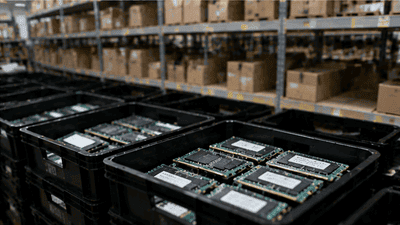
Memory Inventory Digestion Nearing End, Channel Restocking Intentions Strengthen
As the memory cycle of the early–mid 2020s unfolds, one phrase is increasingly heard in industry discussions: the “inventory digest” is nearing its end. For DRAM and NAND makers, module houses, and downstream OEMs, this signals a turning point from prolonged destocking toward a new phase of restocking and channel “restacking.” At the same time, the strength of that restacking intent—how aggressively the supply chain rebuilds inventory and reshapes product mix—will determine the character of the next leg of the memory cycle, from pricing behavior to technology adoption.
 Storage
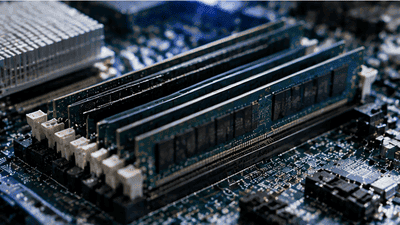
Shortages in DDR5 PMIC and SPD Hub Supply Chain
The transition to DDR5 has introduced not only new performance levels for memory systems but also new complexities in the component supply chain. Among the most critical changes are the introduction of on‑DIMM power management ICs (PMICs) and dedicated SPD hubs, both of which are essential for DDR5 modules to function correctly. As demand for DDR5‑based platforms accelerates, shortages in these components have emerged as a key bottleneck, impacting module makers, OEMs, and data center planners alike.
 Storage
RAID and Erasure Coding Evolution – New Durability Requirements for NAND
As data grows in scale and strategic importance, the mechanisms used to protect it have evolved far beyond traditional disk-era assumptions. RAID, once the primary tool for redundancy and durability, now coexists and competes with erasure coding and other advanced schemes tuned for modern distributed storage. At the same time, NAND flash has become the dominant medium for performance-sensitive storage, bringing its own unique endurance and reliability characteristics.
 Storage
Enterprise NVMe SSD Share Jumps in AI Data Center Procurement Lists
Across the global AI infrastructure landscape, one detail keeps showing up in procurement documents, request‑for‑proposal (RFP) packages, and server bill‑of‑materials: the proportion of enterprise NVMe SSDs is rising sharply. As organizations scale out AI training and inference clusters, they are revisiting every layer of the stack to remove bottlenecks, and storage is no exception. Where traditional SATA SSDs and even high‑end HDDs once dominated, enterprise‑grade NVMe SSDs are now claiming a steadily larger share of the storage line items in AI data center procurement lists.
 Storage
NAND Makers Shift from Production Cuts to QLC/PLC Capacity Allocation
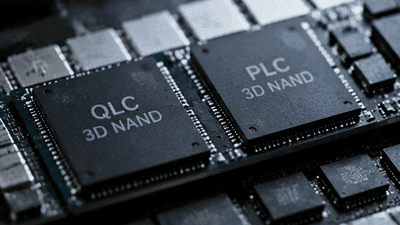
After several years of responding to weak pricing and oversupply with production cuts, NAND flash manufacturers are pivoting to a different playbook. Instead of simply dialing back wafer input, they are reallocating capacity toward higher‑density technologies such as QLC (quad‑level cell) and PLC (penta‑level cell). This strategic shift reflects a maturing market in which the main lever is no longer how many bits to produce, but what kind of bits to make and for which segments.
 Storage
Regression of Data Center SSD Capacity Demand vs. AI Model Size
As AI models grow from millions to billions and now trillions of parameters, data centers are experiencing an equally dramatic expansion in SSD capacity demand. The relationship between how large an AI model is and how much flash storage a data center needs is not linear, but it is systematic enough that architects and planners can model it using regression techniques. Understanding this relationship is crucial for sizing infrastructure, forecasting storage purchases, and ensuring that GPU and accelerator investments are not bottlenecked by inadequate storage capacity.