
Rising Penetration of Equipment Leasing Models Among China’s Small-to-Mid Fabs
Small and mid‑sized semiconductor fabs in China are under intense pressure to expand capacity, upgrade technology, and remain competitive, all while facing tight capital budgets and a rapidly changing market landscape. The traditional model of buying expensive front‑end and back‑end equipment outright is increasingly difficult to sustain for these fabs, especially when technology lifecycles are shortening and demand cycles remain volatile. In this environment, equipment leasing and related flexible acquisition models are gaining traction as practical solutions.

This blog post examines why equipment leasing is penetrating more deeply into China’s small and mid‑tier fabs, how these models work in practice, and what implications they carry for fab operators, equipment vendors, and the wider semiconductor ecosystem. It also explores the benefits and risks of leasing and looks ahead to how these models may evolve as China’s semiconductor industry continues its push toward greater scale and sophistication.
Context: capital intensity and structural constraints
Semiconductor manufacturing has always been capital intensive. Lithography tools, deposition and etch systems, metrology platforms, and advanced packaging equipment all require enormous upfront investment. For large leading‑edge fabs, these costs are justified by high volumes and strong access to capital markets. Small to mid‑sized fabs, which often focus on mature nodes, specialty processes, or regional customer bases, operate under different constraints.
These fabs may lack access to low‑cost financing or large government subsidies and often experience more uneven demand. Yet they still need to add new tools, replace aging equipment, and keep process capabilities reasonably current. This gap between capital requirements and financial flexibility creates fertile ground for alternative equipment acquisition models, among which leasing is increasingly prominent.
In China, where semiconductor industrial policy encourages expansion across the full spectrum of fabs—not just the most advanced—leasing becomes a way to align policy ambition with practical funding mechanisms at the factory floor level.
What equipment leasing means in semiconductor fabs
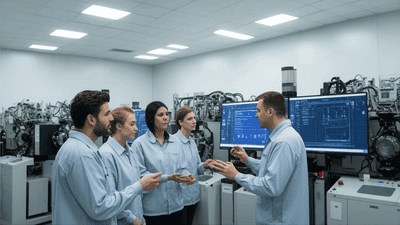
Equipment leasing in the semiconductor context typically involves an equipment vendor, financial institution, or specialized leasing company providing tools to a fab under a contract that spreads payments over time rather than requiring full upfront purchase. The fab gains use of the equipment for a fixed term, often with options to extend, upgrade, or purchase at the end of the lease.
Contracts may be structured as operating leases, where the equipment remains on the lessor’s balance sheet and the fab treats payments as operating expenses, or as finance‑type leases that more closely resemble deferred purchase arrangements. Some deals bundle maintenance, spare parts, and performance guarantees into the leasing package, effectively turning equipment access into a managed service.
For China’s small and mid‑sized fabs, these arrangements convert large capital outlays into manageable periodic payments and reduce the financial barrier to acquiring sophisticated tools.
Key drivers of leasing penetration among smaller fabs
Several forces are pushing equipment leasing models into wider use among China’s smaller and mid‑tier fabs. One is the need to ramp capacity quickly to meet growing demand for domestic chips in consumer, automotive, industrial, and telecom applications. Leasing allows fabs to add tools faster without long approval cycles for large capital expenditures.
Another driver is technology risk. As process recipes and customer requirements evolve, committing to outright purchases of tools that may become less relevant within a few years feels risky. Leasing spreads that risk over time and offers upgrade or replacement options within the contract framework. A third driver is macroeconomic uncertainty and cyclical demand: fabs can better match equipment commitments to actual business visibility through shorter lease terms and flexible renewal clauses.
Together, these drivers make leasing an attractive complement—or alternative—to traditional procurement, particularly for operators that must balance growth ambitions with cautious financial management.
Leasing models in practice: variations and hybrids

In practice, leasing models come in several forms. Simple time‑based leases grant the fab usage of equipment for a fixed period in exchange for periodic payments. More sophisticated models tie payments to throughput, wafer starts, or other performance metrics, effectively creating pay‑per‑use arrangements where costs scale with actual utilization.
Hybrid models may combine leasing with options for partial ownership, revenue‑sharing, or joint investment structures. For example, a fab and equipment vendor might co‑fund a tool, with the vendor retaining some ownership while providing favorable lease terms and ongoing support. Another variation bundles multiple tools into a portfolio lease that allows the fab to swap out certain tool types over time as needs change.
China’s small and mid‑tier fabs tend to favor models that balance flexibility and predictability: contracts that offer clear cost structures but also leave room to adjust tool mix as product lines and customer bases evolve.
Benefits to small and mid‑sized fabs
The benefits of leasing for smaller fabs are both financial and operational. Financially, leasing reduces upfront capital expenditure, improving cash flow and preserving borrowing capacity for other investments such as facility upgrades or R&D. Because payments are spread out, fabs can better align costs with revenue from ongoing production.
Operationally, leasing can accelerate equipment access. Fabs can bring in tools earlier in their expansion plans and start running new processes without waiting for lengthy capital approval cycles. Leasing agreements may also include maintenance and support, reducing burden on internal engineering teams and enhancing uptime.
Additionally, leasing mitigates obsolescence risk. When a leased tool no longer meets requirements, the fab may return or replace it rather than being forced to operate a fully depreciated but technologically outdated asset simply because of sunk cost considerations.
Advantages for equipment vendors and lessors

Equipment vendors and leasing providers also gain from the rising penetration of leasing models. Vendors can reach a broader set of customers, including those who might not afford outright purchases. Leasing relationships create recurring revenue streams through periodic payments and associated service contracts.
Leasing also deepens customer engagement. Vendors with tools on lease often maintain closer involvement in tool performance, upgrades, and process tuning, fostering long‑term partnerships rather than one‑time sale transactions. This can lead to more stable demand, better insight into customer roadmaps, and opportunities to cross‑sell or upsell complementary tools and services.
For leasing companies and financial institutions, semiconductor equipment leasing represents a growing asset class with potentially attractive returns, provided they carefully manage technical and market risks.
Segment focus: mature nodes, specialty processes, and regional fabs
In China, small and mid‑tier fabs frequently focus on mature nodes and specialty processes such as power devices, analog ICs, microcontrollers, and RF components. These segments typically have longer product lifecycles and more diverse customer bases compared with cutting‑edge logic nodes.
Leasing models align well with this environment. Fabs can acquire tools tailored to specific niche processes—such as particular diffusion furnaces, implant tools, or packaging lines—without committing full capital for each segment upfront. As demand shifts between applications, they can adjust leased tool portfolios accordingly.
Regional fabs that serve local markets, including industrial clusters and provincial manufacturing bases, also benefit from leasing as they attempt to upgrade capabilities in alignment with local economic development plans and customer needs.
Technology upgrade cycles and leasing
Rapid technology evolution is a defining feature of the semiconductor industry. Even at mature nodes, process improvements, new materials, and advanced packaging techniques continue to emerge. For small and mid‑sized fabs, keeping up with these developments is essential to maintaining competitiveness.
Leasing supports more agile upgrade cycles. Instead of waiting for full depreciation of older tools, fabs can plan earlier refreshes by switching leased equipment to newer models. Equipment vendors may offer upgrade paths within lease contracts, allowing fabs to step up to more advanced tools without restarting the financial relationship from scratch.
This flexibility helps smaller fabs avoid being trapped in extended periods of technological stagnation, which can be particularly damaging in markets where customers expect continuous performance and cost improvements.
Risk management: demand uncertainty and utilization
Demand uncertainty is a major challenge for semiconductor fabs. Order flows can be volatile due to macroeconomic cycles, inventory adjustments, and shifts in end‑market trends. For small and mid‑tier fabs, which may have concentrated customer portfolios, these swings can be pronounced.
Leasing allows these fabs to limit exposure to under‑utilized equipment. If demand falls significantly, the financial burden of leased tools, while still present, may be easier to renegotiate or manage than fixed sunk capital. Some leasing arrangements even tie costs to utilization metrics, offering natural buffering in down cycles.
From a strategic perspective, this risk management aspect of leasing complements other operational risk mitigations, such as diversified customer bases and multi‑segment product portfolios.
Challenges and constraints of leasing models
Despite their advantages, leasing models are not without challenges. One concern for fabs is total cost of ownership over the long term. While leasing lowers upfront expenses, cumulative payments plus service fees can, in some scenarios, exceed the cost of outright purchase, especially if tools remain in use for many years.
Another challenge is contract rigidity. Poorly designed leases may lock fabs into tool configurations that no longer fit evolving process needs or customer demands. Negotiating favorable terms requires experience and leverage, which smaller operators may lack compared with larger industry players.
From the lessor’s side, managing technical risk is critical. Semiconductor equipment is specialized, and residual values depend heavily on future demand for specific tool types and nodes. Lessors must understand technology trends and secondary market dynamics to avoid being left with under‑utilized assets at lease end.
Policy environment and local financing ecosystems
China’s broader policy environment influences the uptake of leasing. National and regional semiconductor development programs encourage the growth of local fabs and supporting industries. Financial institutions, including state‑linked entities, may be incentivized to provide structured financing and leasing solutions aligned with these goals.
Local financing ecosystems that understand semiconductor risk profiles and technology cycles are better positioned to offer tailored leasing products. This includes banks, leasing companies, and venture‑backed financial platforms. In some cases, government programs may share risk or provide guarantees, making leasing more accessible for smaller fabs.
As these ecosystems mature, equipment leasing can become a standard element of fab expansion and modernization strategies rather than a niche or experimental approach.
Impact on supply chain relationships
Leasing models change the nature of relationships along the semiconductor supply chain. Equipment vendors move closer to being long‑term partners, with responsibility for ensuring tool performance over extended periods. Fabs gain more leverage in aligning tool capabilities with evolving process and product roadmaps.
Service and maintenance become central components of the relationship rather than peripheral add‑ons. Vendors and lessors must commit to fast response times, robust spare parts logistics, and continuous improvement in tool uptime and reliability to keep leased equipment attractive.
Over time, these strengthened relationships can support collaborative innovation, including joint development of process modules, co‑optimization of equipment and recipes, and shared risk in introducing new technologies into production.
Case patterns: typical trajectories for small to mid fabs
While individual fab circumstances vary, several common trajectories are emerging among China’s small and mid‑tier operators. A typical path might start with leasing a limited number of critical tools—such as lithography or advanced inspection systems—to enable new product lines, while continuing to own more mature equipment.
As confidence in leasing grows, fabs may expand their leased tool portfolios, incorporating etch, deposition, or packaging equipment. Some shift toward mixed models where core tools are leased with integrated service agreements, and niche or low‑utilization tools are acquired through second‑hand markets or joint ownership structures.
Successful fabs use these strategies to gradually upgrade overall capability, moving from purely mature node production into more specialized or higher value‑added segments without overextending their capital budgets.
Future evolution of leasing models
Looking ahead, equipment leasing models for China’s small to mid fabs are likely to become more sophisticated. We may see greater use of performance‑based contracts where payments depend on yield or throughput targets, further aligning vendor and fab incentives. Data‑driven leasing, leveraging real‑time tool performance and utilization data, could enable dynamic pricing or tailored maintenance schedules.
More integrated service bundles may emerge as well. For example, leases that combine hardware, process consulting, training, and software upgrades into single packages may offer fabs comprehensive support for entering new markets or technologies. Cross‑fab leasing or shared equipment hubs could appear in industrial parks, allowing multiple small fabs to access advanced tools via pooled arrangements.
These evolutions will depend on the maturity of financial and industrial ecosystems, as well as trust and collaboration levels among fabs, vendors, and financing partners.
Strategic implications for China’s semiconductor ecosystem
The rising penetration of equipment leasing models among China’s small to mid‑sized fabs has broader strategic implications. By lowering barriers to equipment access, leasing accelerates the build‑out of domestic manufacturing capacity across varied segments, not just at the leading edge.
This helps China diversify its semiconductor production base, supporting local supply for automotive, industrial, consumer, and telecom applications. It also deepens the domestic equipment and service ecosystem: vendors accustomed to leasing arrangements gain experience in long‑term support, upgrade cycles, and collaborative process development.
Ultimately, leasing models contribute to a more flexible, resilient manufacturing landscape in which smaller fabs can play a meaningful role alongside large flagship plants, enhancing overall ecosystem robustness.
Conclusion: leasing as an enabler, not a substitute
The rising use of equipment leasing models among China’s small to mid‑sized fabs reflects a pragmatic response to the capital intensity and uncertainty inherent in semiconductor manufacturing. Leasing does not replace traditional investment or policy support; rather, it complements them by offering flexible pathways to acquire and operate critical tools.
For fab operators, leasing is an enabler of faster capacity expansion, more agile technology upgrades, and better risk management. For equipment vendors and financiers, it opens new business opportunities and deeper customer relationships. As China’s semiconductor industry continues to grow and diversify, equipment leasing is poised to remain an important ingredient in the mix of strategies that support sustainable, competitive manufacturing across the full spectrum of fabs.