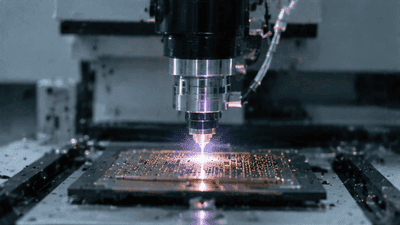
Localization Progress of Equipment Parts: Ceramic Heaters and Electrostatic Chucks
As semiconductor manufacturing becomes more strategically important and supply chains more scrutinized, attention is shifting from headline tools—like lithography scanners and etchers—to the critical parts inside these systems. Among the most important of these parts are ceramic heaters and electrostatic chucks, which play central roles in thermal management and wafer handling in front‑end processes. Their localization, meaning the development and production of these parts within domestic or regional ecosystems rather than relying entirely on imports, is now a key topic for both equipment vendors and fabs.
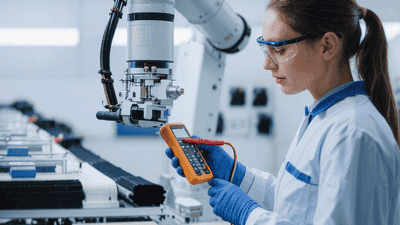
This blog post explores why ceramic heaters and electrostatic chucks matter so much, the technical and supply chain challenges they present, the progress being made toward localization, and what this means for equipment reliability, cost structures, and strategic autonomy in semiconductor manufacturing.
Why parts localization has become strategic
Semiconductor tools are complex systems made up of high‑value parts and modules sourced from global specialty suppliers. Historically, many fabs and tool vendors adopted a globalized model: design and integration were done in one region, while key parts such as heaters, chucks, valves, and sensors were sourced wherever technical quality and price were best.
In recent years, geopolitical tensions, export controls, logistics disruptions, and industrial policy initiatives have pushed many countries and companies to reconsider this approach. Localizing critical parts reduces dependence on distant suppliers, improves resilience against trade restrictions or transport bottlenecks, and creates domestic industrial capabilities that can be leveraged for innovation.
Ceramic heaters and electrostatic chucks are prime candidates for localization efforts because they are essential for core processes like etch and deposition, directly influence yield and tool uptime, and are often subject to long lead times and specialized production requirements.
Ceramic heaters in semiconductor tools
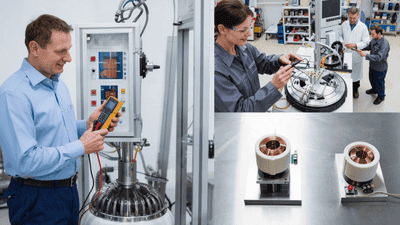
Ceramic heaters are used extensively in chemical vapor deposition (CVD), atomic layer deposition (ALD), epitaxy, and certain etch and anneal tools. They provide precise, stable temperature control at the wafer surface, enabling tight process windows for film growth, dopant activation, and surface reactions.
These heaters are typically made from advanced ceramic materials that can withstand high temperatures, corrosive chemistries, plasma exposure, and rapid thermal cycling. They often incorporate embedded resistive elements, complex geometries, and tight tolerances on flatness and uniformity to ensure consistent wafer heating across large diameters.
From a parts localization perspective, ceramic heaters represent a high‑precision, high‑reliability component whose manufacturing demands sophisticated materials engineering, machining, and quality control capabilities.
Electrostatic chucks: invisible but essential
Electrostatic chucks (ESCs) hold wafers firmly in place inside vacuum chambers, using electrostatic forces generated by applied voltages between chuck electrodes and the wafer. ESCs are ubiquitous in plasma etch, deposition, and other processes where mechanical clamping would be impractical or would interfere with process uniformity.
An ESC must offer strong, stable clamping, excellent thermal conduction between the wafer and temperature‑controlled chuck, and a robust dielectric layer that withstands plasma exposure and voltage stress. Surface flatness and cleanliness are critical to avoid particle generation and ensure uniform heat transfer and process conditions.
Like ceramic heaters, electrostatic chucks sit at the intersection of materials science, precision manufacturing, and electrical engineering. Their performance directly affects process stability, wafer yield, and tool uptime, making them focal points of localization efforts.
Technical challenges in localizing ceramic heaters
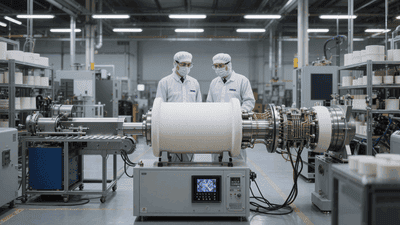
Localizing ceramic heater production involves several technical hurdles. First is material formulation: the ceramic composition must deliver high thermal stability, controlled expansion characteristics, and resistance to process chemistries. Developing and consistently reproducing such formulations requires advanced ceramic technology and meticulous process control.
Second is manufacturing precision. Large‑diameter heaters must be machined and finished to tight tolerances in thickness, flatness, and surface roughness. Embedded heater elements must be positioned accurately to achieve uniform temperature profiles. High‑temperature joining or co‑firing steps must avoid creating voids or stresses that could lead to cracking or warping.
Third is reliability testing. Locally produced heaters must prove that they can survive thousands of thermal cycles, maintain performance over long tool lifetimes, and match or exceed the performance of established imported parts. This requires coordinated qualification efforts between parts makers and equipment vendors.
Progress indicators for ceramic heater localization
Progress in ceramic heater localization is often seen in stages. Early efforts focus on simpler heater designs for less demanding processes—perhaps lower temperature or smaller wafer sizes—allowing local producers to build experience and demonstrate basic capability.
As confidence grows, local manufacturers move into more complex designs, targeting mainstream etch and deposition tools with standard wafer diameters such as 200 mm and 300 mm. Equipment vendors may begin validating locally produced heaters in specific tool models or process modules, running pilot programs and sharing feedback on performance, yield impact, and reliability.
Over time, successful localized heaters enter volume production and become approved options or standard parts for certain tool configurations. At this stage, fabs see localized heaters appearing in their spare parts lists and procurement options, signaling tangible progress beyond prototype or pilot phases.
Technical hurdles in electrostatic chuck localization
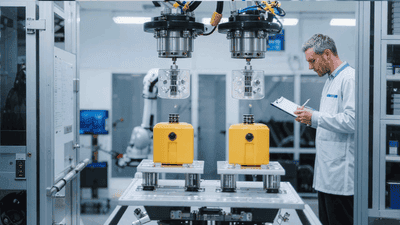
Electrostatic chucks present their own set of technical challenges. Materials selection is critical: the chuck body, dielectric layer, and embedded electrodes must collectively offer precise dielectric properties, stable clamping behavior, and good thermal conduction fields. Any defects or inconsistencies can lead to wafer slip, non‑uniform heating, or electrical breakdown.
Manufacturing processes must ensure perfect bonding between layers, accurate electrode geometry, and a defect‑free dielectric surface. Particle contamination, pinholes, or micro‑cracks can dramatically reduce ESC lifetime or cause process excursions. The chuck surface may need specialized treatments to balance friction and cleanliness.
Electrical and thermal performance characterization is equally important. Local ESCs must demonstrate stable clamping forces over the desired voltage range, predictable de‑clamping behavior, and uniform thermal contact with wafers across different process conditions.
Signs of localization progress for electrostatic chucks
Progress in ESC localization typically begins with chucks for less demanding applications—such as mature‑node tools, lower‑power plasmas, or smaller wafer sizes—where performance requirements and operating stresses are somewhat more forgiving.
Local suppliers may first focus on replacement ESCs for existing tools, offering lower cost or shorter lead times compared with foreign vendors. As their products gain field experience, they gradually expand into more complex applications, including higher‑power etch and deposition processes and larger wafer diameters.
Equipment vendors play a key role in validating these chucks, integrating them into tool configurations and monitoring process stability and defectivity. Over time, successful localized ESCs become part of the approved parts ecosystem, allowing fabs to choose local options without sacrificing reliability.
Qualification and co‑development with equipment vendors
Localization of critical parts cannot progress separately from equipment vendors. For both ceramic heaters and ESCs, tool makers must work closely with local parts suppliers to define specifications, refine designs, and navigate the trade‑offs between performance, cost, and manufacturability.
Co‑development efforts may include iterative design cycles, where prototypes are tested in lab tools, followed by small‑scale production and controlled deployment in selected customer fabs. Feedback on yield impact, process stability, and failure modes is fed back to parts manufacturers, who adjust materials, manufacturing processes, or design features accordingly.
Such collaboration accelerates localization progress, but it also demands deep technical engagement and trust between equipment vendors and local parts suppliers—a relationship that takes time and successful joint projects to establish.
Economic benefits of parts localization
Once localized ceramic heaters and ESCs reach reliable production, fabs and equipment vendors can realize several economic benefits. Shorter supply chains reduce lead times for parts and spares, improving tool uptime and decreasing the need for large inventory buffers. Local production often reduces logistics costs and exposure to currency fluctuations or cross‑border tariffs.
Competition among local and international parts suppliers can lower prices or at least stabilize cost structures, giving fab operators more predictable maintenance budgets. For equipment vendors, localized parts can make their tools more attractive in regions that prioritize domestic content, as part of broader localization or industrial policy goals.
Additionally, local parts ecosystems create skilled jobs and support adjacent industries such as precision machining, high‑purity materials production, and specialized metrology, strengthening the broader industrial base around semiconductor manufacturing.
Strategic resilience and export control considerations
Localization of ceramic heaters and ESCs also contributes to strategic resilience. These parts are sometimes subject to export controls or supplier policies that can limit availability during periods of geopolitical tension. By developing domestic or regional sources, fabs and tool vendors reduce their exposure to sudden restrictions or disruptions.
In environments where access to advanced equipment is constrained, the ability to maintain and repair existing tools with localized parts becomes even more important. Reliable local heaters and ESCs can help extend the useful life of installed equipment and maintain production levels despite limitations on new tool imports.
While parts localization does not fully replace the need for advanced tools or global collaboration, it is a practical step toward greater autonomy in maintaining and operating semiconductor manufacturing capacity under varying external conditions.
Remaining gaps and performance benchmarks
Despite progress, gaps often remain between localized and imported parts, especially at the highest performance levels. For ceramic heaters, achieving identical temperature uniformity, long‑term stability, and low defectivity in demanding processes can take multiple development cycles. For ESCs, matching the clamping stability, dielectric robustness, and thermal performance of well‑established foreign products is a challenging benchmark.
Fabs and tool vendors use performance metrics—such as wafer temperature uniformity, defect counts, mean time between failures, and process drift—to compare localized parts with their imported counterparts. In some cases, localized parts are initially used in less critical process steps or backup roles until performance converges sufficiently to justify primary deployment.
Recognizing these gaps candidly helps set realistic expectations and guides investment into the most impactful improvements in materials, manufacturing, and testing capabilities for local suppliers.
Role of metrology and reliability testing
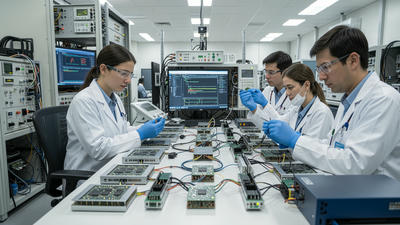
Metrology and reliability testing are essential enablers of successful localization. For ceramic heaters, advanced thermal imaging, contact thermometry, and uniformity mapping verify performance under real process conditions. Mechanical and thermal stress tests simulate long‑term operation to detect potential failure modes such as cracking or delamination.
For ESCs, metrology includes surface flatness measurements, dielectric breakdown testing, leakage characterization, and clamping force analysis under varying voltages and process environments. Long‑duration plasma exposure tests and cycling studies help predict lifetime behavior.
Local parts manufacturers must invest in such metrology capabilities or work with specialized institutes and tool vendors to perform comprehensive testing. Robust, data‑driven qualification builds confidence and supports broader adoption of localized parts.
Regional differences and localization strategies
Localization progress varies by region, influenced by existing industrial bases, policy frameworks, and equipment vendor presence. Some countries may already have strong ceramic and precision manufacturing industries, giving them a head start in heater production. Others may focus first on ESCs, leveraging local strengths in materials engineering or electrical component manufacturing.
Policy support also matters. Regions that prioritize domestic content in semiconductor tools may provide incentives for local parts manufacturing, support R&D programs, or encourage partnerships between fabs, universities, and parts suppliers. These measures can accelerate localization timelines and encourage equipment vendors to incorporate localized options into their global strategies.
There is no single path to localization; successful strategies tend to focus on segments where local capabilities can reach competitive performance within a reasonable timeframe, then expand step by step into more advanced or demanding applications.
Future directions: integration, smart parts, and sustainability
Looking forward, localization of ceramic heaters and ESCs may intersect with broader trends such as increased sensor integration, smart parts, and sustainability. Local manufacturers could incorporate embedded sensors and data interfaces into heaters and chucks, enabling real‑time monitoring of temperature distribution, clamping behavior, or part health.
Such smart parts can feed data into fab‑wide monitoring and predictive maintenance systems, improving tool uptime and process control. Localization, in this context, is not just about reproducing existing designs but also about innovating new features tailored to local needs and capabilities.
Sustainability considerations—such as materials selection, energy efficiency, and recycling of worn parts—may also shape future localized designs, aligning semiconductor manufacturing with broader environmental and regulatory goals.
Conclusion: from dependence to capability
The localization progress of equipment parts like ceramic heaters and electrostatic chucks illustrates a broader transition in the semiconductor industry: from dependence on distant, specialized suppliers toward the development of domestic and regional capabilities that underpin strategic resilience and innovation.
Although technical and qualification challenges remain, steady advances in materials, manufacturing, and testing are moving localized parts from pilot projects into mainstream use. For fabs, equipment vendors, and policymakers, supporting this evolution is an investment not only in cost and supply chain robustness, but also in the long‑term capacity to innovate at the core of semiconductor manufacturing technology.