Equipment Makers Transition from Hardware Sales to "Hardware + Service + Consumables" Model
Semiconductor manufacturing has long been defined by massive capital investments in complex tools: lithography scanners, etchers, deposition systems, implant machines, metrology platforms, and packaging equipment. For decades, the core business of most equipment makers revolved around selling this hardware—large, one‑time transactions that anchored fab capacity expansion and technology upgrades. Today, that model is undergoing a decisive transformation. Across the industry, equipment makers are shifting from pure hardware sales toward integrated “Hardware+Service+Consumables” offerings, where long‑term support contracts, process services, and recurring consumable sales form an increasingly large share of revenue and strategic focus.
This blog post examines why that transition is happening, how it changes relationships between tool suppliers and fabs, what it means for cost structures and performance, and how it reshapes competition and innovation in the semiconductor equipment ecosystem. The story is not just about new revenue streams; it is about a deeper change in how equipment value is defined and delivered over the life of a tool.
From one‑time hardware sales to lifecycle value
In the traditional model, equipment transactions were dominated by up‑front hardware sales. A fab procured tools, installed them, and then handled most maintenance and process tuning internally, occasionally buying spare parts or limited service packages. The bulk of the economics and focus sat at the moment of sale: tool performance specs, initial price, and delivery schedules.
As semiconductor manufacturing has grown more complex and tools have become more integrated into intricate process modules, this snapshot view of value has proved insufficient. A tool’s true contribution now depends heavily on how it performs over years: uptime, yield impact, ability to support new recipes, and efficiency in using consumables such as specialty gases, chemistries, and parts. Equipment makers realized that they could create more value—and capture more of it—by engaging with fabs throughout the tool lifecycle, not just at installation.
The “Hardware+Service+Consumables” model reflects this shift from one‑time transactions to lifecycle partnerships, where ongoing performance and support matter as much as initial specifications.
Why the transition is accelerating now
Several forces are accelerating the move toward integrated models. First, advanced nodes and complex device architectures demand higher tool performance and tighter process windows. Fabs depend on tool suppliers’ expertise to tune and maintain systems, making ongoing services more critical. Second, cost pressures and capital intensity push both fabs and suppliers to seek smoother, more predictable revenue and spending patterns, where recurring service and consumable contracts help balance lumpy hardware cycles.
Third, competitive differentiation has shifted. As basic tool capabilities converge in some segments, suppliers look to value‑added services—process optimization, data analytics, remote diagnostics—to stand out. Finally, digitalization and connectivity make it easier to monitor tools, deliver remote support, and optimize consumable usage, enabling new business models that were not practical when tools were more isolated and offline.
Together, these factors make the “Hardware+Service+Consumables” approach not just attractive but increasingly necessary for long‑term competitiveness.
Components of the Hardware+Service+Consumables model
The emerging model has three main pillars. Hardware remains the foundation: core tools are still sold or leased, providing the physical capability to pattern, etch, deposit, measure, or assemble devices. Over this, equipment makers layer service offerings: maintenance contracts, process engineering support, software updates, training, and sometimes on‑site expert teams.
The third pillar is consumables: parts with finite lifetimes, specialized chemistries, filters, ceramic components, electrostatic chucks, targets, and other materials that must be regularly replaced or replenished. By bundling these elements—hardware, service, and consumables—into integrated packages, suppliers create a continuous relationship with fabs that spans the full operational life of tools.
In many cases, contracts increasingly resemble long‑term performance agreements rather than simple purchase orders, with structured terms for uptime, response times, upgrade paths, and consumable cost management.
Service: from break‑fix to proactive performance management
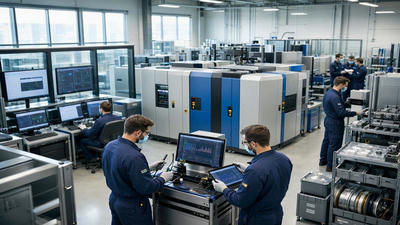
In the older paradigm, service mostly meant break‑fix work: respond when tools fail, replace parts, and restore operations. In the new model, service expands into proactive performance management. Equipment makers offer preventive maintenance schedules, predictive diagnostics, and regular health checks based on tool data. They often provide process optimization support, helping fabs adjust recipes to improve yield, throughput, or energy consumption.
Service may include remote monitoring of key subsystems, software tuning, and collaboration on new process modules. In some arrangements, suppliers commit to uptime or performance targets, aligning their incentives with fab production goals. This deeper involvement turns service into an ongoing, strategic component of tool usage, rather than a peripheral, reactive function.
As a result, service revenues grow, but more importantly, service becomes inseparable from how fabs evaluate and select equipment vendors.
Consumables: recurring revenue and process control
Consumables are central to the integrated model because they represent recurring needs tied directly to tool operation. Every wafer processed consumes chemistries, gases, slurries, targets, filters, and component lifetimes. Equipment makers increasingly design tools in ways that optimize—and sometimes standardize—the consumables they require, then offer those consumables themselves or through tightly coordinated partners.
This creates a recurring revenue stream that can be more stable than hardware cycles. It also allows suppliers to influence process performance by controlling consumable quality and characteristics. For example, a vendor may provide tailored precursors for a deposition system, ensuring consistent film properties while capturing related consumable revenues.
In some cases, equipment makers offer packages where consumables, tool tuning, and service are bundled, turning the entire process module into a managed solution rather than a simple hardware installation.
Economic implications: smoothing cycles and shifting margins
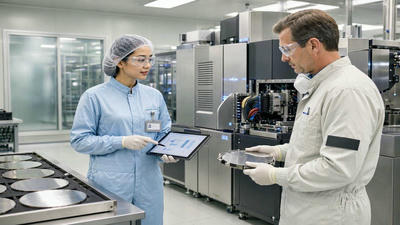
Economically, the transition to Hardware+Service+Consumables changes revenue profiles and margin structures for equipment companies. Hardware sales remain cyclical, driven by capex waves and technology transitions. Service and consumables introduce more predictable, recurring revenues that can soften downturns and extend earnings beyond peak hardware years.
Margins can shift as well. Hardware may have high gross margins but volatile volumes; consumables can offer steady, moderate margins at scale; services can deliver high‑margin contributions if delivered efficiently. By balancing these components, suppliers aim to create more resilient financial performance.
For fabs, this mix alters how costs are recognized: less one‑time capital outlay relative to the full value received, more ongoing operational expenses tied to service and consumables. That shift has implications for budgeting, accounting, and investment planning.
Impact on fab operations and decision‑making
For fab operators, the integrated model influences how they evaluate tool purchases and partnerships. Decisions no longer hinge solely on initial hardware specifications and price; they increasingly consider the total cost of ownership, including service quality, consumable costs, and long‑term upgrade pathways.
Fabs assess whether a vendor can provide reliable support across multiple years, respond quickly to issues, and collaborate on process improvements. They scrutinize consumable pricing, supply stability, and performance impact, understanding that these factors will shape ongoing costs and yields. Some fabs negotiate comprehensive packages that cap certain consumable costs, specify uptime commitments, or include co‑development clauses for new processes.
Overall, fab decision‑making shifts toward evaluating the full ecosystem surrounding a tool, rather than the tool in isolation.
Data and connectivity as enablers
The rise of Hardware+Service+Consumables is closely linked to increased tool connectivity and data usage. Modern equipment can stream performance metrics, error logs, process parameters, and consumable usage data to central systems. Suppliers use this data to monitor fleets of tools, detect anomalies, and recommend maintenance before failures occur.
Connectivity allows remote diagnostics and sometimes remote software adjustments, reducing response times and travel requirements. Data analytics help optimize consumable usage—adjusting chemistries or replacement intervals to balance cost and performance. These capabilities make service and consumable management more effective and quantifiable, reinforcing the value of integrated models.
Fabs benefit by gaining richer visibility into how tools behave, which supports both operational decisions and strategic planning for future investments.
Examples of integrated offerings across tool categories
The integrated model manifests differently across tool categories but shares common principles. In etch and deposition systems, suppliers might bundle hardware with process tuning services, proprietary chemistries, and scheduled replacement of key parts such as ceramic components or chucks. In lithography, service packages may focus on alignment performance, overlay tuning, and optics maintenance, while consumables include specialized filters or certain optical elements.
In CMP and cleaning, integrated offerings may combine slurries, pads, and chemistries with hardware and process control services. In metrology and inspection, service contracts often center on maintaining calibration and software algorithms, with consumables covering certain components or targets.
Across these categories, the underlying idea is the same: tool suppliers anchor their role in overall process performance by managing both the hardware and its operational environment.
Competitive dynamics: differentiation beyond the tool itself
As equipment makers transition to Hardware+Service+Consumables, competition moves beyond core hardware specifications. Vendors compete on the breadth and quality of their service networks, the performance and cost of their consumables, and the sophistication of their data and analytics platforms.
A supplier with excellent hardware but weak service or expensive, unstable consumables may lose ground to a competitor offering a stronger integrated package. Conversely, a vendor may gain advantage through superior process support and consumable optimization even if hardware specifications are similar.
This shift encourages investment in service infrastructure, training, consumables R&D, and software capabilities, widening the scope of what it means to be an equipment company in semiconductors.
Risks and challenges of the new model
The integrated model also brings risks and challenges. For equipment makers, expanding into services and consumables requires new capabilities and organizational structures. Managing global service teams, consumable supply chains, and complex contracts can be demanding. Missteps in consumable quality or service reliability can damage customer trust and undermine the perceived value of the bundle.
For fabs, dependence on integrated offerings can raise concerns about vendor lock‑in. If tools are optimized around proprietary consumables or service platforms, switching providers may become more difficult and costly. Fabs must weigh the benefits of tightly integrated support against the desire for flexibility and multi‑sourcing.
Both sides need clear agreements and transparency to manage these risks effectively.
Environmental and sustainability dimensions
Another emerging dimension of Hardware+Service+Consumables is sustainability. Consumables involve materials, chemicals, and energy usage; services involve travel, infrastructure, and resource consumption. Equipment makers and fabs increasingly consider how integrated packages can reduce waste, lower chemical usage, and improve energy efficiency.
Suppliers may offer consumables designed for reduced environmental impact, along with recycling or recovery programs. Service packages might include energy‑efficient tool tuning or recommendations for reducing water or chemical consumption. These sustainability features can become part of the value proposition, aligning equipment strategies with broader environmental goals and regulatory requirements.
In the long run, integration may help coordinate sustainability efforts across hardware, services, and consumables more effectively than fragmented approaches.
Financial and contractual innovation
Transitioning to Hardware+Service+Consumables also drives financial and contractual innovation. Instead of separate purchase orders for tools, parts, and support, fabs and equipment makers increasingly negotiate multi‑year agreements that bundle elements into unified frameworks. These may include fixed service fees, variable charges tied to tool usage, or performance‑based clauses tied to uptime or yield metrics.
Some arrangements resemble “solution” contracts, where a vendor commits to provide and maintain a process capability over time rather than simply selling hardware. Others incorporate leasing structures, pay‑per‑use components, or shared risk models. These contracts can align incentives more closely and provide more predictable financial planning for both sides.
However, they also require careful design to ensure clarity, fairness, and manageable complexity.
Long‑term implications for the equipment ecosystem
Looking ahead, the transition from hardware sales to Hardware+Service+Consumables is likely to reshape the equipment ecosystem in several ways. Companies that successfully build strong service and consumable businesses alongside hardware will gain more stable revenue bases and closer customer relationships. Those that remain hardware‑centric may find themselves exposed to deeper cycles and narrower differentiation.
The ecosystem around equipment may expand to include more specialized consumable suppliers, data analytics firms, and service partners, often working in tight collaboration with core tool makers. Fabs may organize their procurement and engineering teams around integrated solutions rather than individual components.
Ultimately, the boundaries between “equipment vendor,” “service provider,” and “materials supplier” may blur, as all contribute jointly to delivering the process capabilities fabs need.
Conclusion: a structural shift in how equipment value is delivered
The transition from pure hardware sales to a “Hardware+Service+Consumables” model marks a structural shift in the semiconductor equipment industry. It reflects the reality that tool value is realized over years of operation, not just at installation, and that performance, uptime, and consumable efficiency are as important as initial specifications.
For equipment makers, embracing this integrated model is both an opportunity and a challenge, requiring new capabilities but offering more resilient, differentiated businesses. For fabs, it changes how they evaluate vendors, manage costs, and plan processes. As semiconductor manufacturing continues to grow in complexity and strategic importance, the companies that master this integrated approach will play a central role in shaping the future of the global chip production landscape.