Tracking 5-Year Geographic Shifts of Global Leaders via the MSCI Semi Industry Index
The semiconductor industry has never been more global, and yet at the same time, it has never been more geographically divided. Over the past five years, the center of gravity among global semiconductor leaders has shifted in noticeable ways, driven by AI demand, advanced packaging, supply chain security, regional industrial policy, and the growing importance of equipment and materials ecosystems. The MSCI Semi Industry Index offers a useful way to track these changes because it captures some of the world’s most important semiconductor and semiconductor equipment leaders across developed markets. Looking at its five-year evolution is therefore not just an index exercise. It is a way to understand how the global semiconductor map has been redrawn.

What makes the story interesting is that the shifts are not confined to one region or one segment. Some leaders have moved because of foundry dominance, others because of memory cycles, and others because of equipment or advanced packaging exposure. Geography now matters in a more complicated way than before. It affects where R&D is done, where advanced packaging capacity is located, where manufacturing risk sits, and where the industry believes long-term value will be created. The MSCI Semi Industry Index becomes a lens for all of that.
Why Geography Matters Now
Five years ago, semiconductor geography already mattered, but the industry still felt relatively centralized around a few manufacturing hubs. Today, geographic location influences everything from policy risk to customer trust. A company’s country of listing, manufacturing base, supply chain footprint, and customer access can all affect how it is perceived in global markets. That is especially true in semiconductors, where the most valuable products often depend on tightly coordinated ecosystems rather than isolated factories.
The MSCI Semi Industry Index is helpful because it reflects a broad developed-market view of the semiconductor industry. That means it can capture how leadership shifts between North America, Europe, and parts of Asia that host listed global semiconductor companies. Over a five-year period, those shifts become visible through index membership, sector weightings, and relative performance. The result is a picture of an industry that is increasingly shaped by geography as much as by technology.
The Five-Year Lens
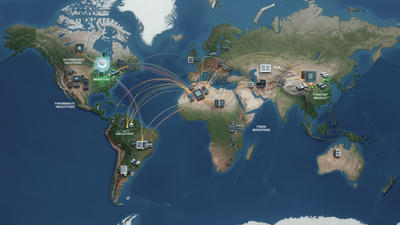
A five-year window is long enough to capture structural change but short enough to remain relevant to current market conditions. In semiconductors, that matters because the industry moves through distinct phases. A five-year period can include AI adoption, memory downturns and recoveries, equipment cycles, export restrictions, advanced packaging expansions, and shifts in customer concentration. It can also capture the rise of chiplets, HBM, and the broader heterogeneous integration trend.
If you track global leaders through the MSCI Semi Industry Index over such a window, you begin to see more than just stock performance. You see where semiconductor leadership has moved physically and strategically. Some companies gain prominence because they dominate the tools needed to build the next generation of chips. Others rise because they are central to the AI buildout. Others remain important because they control critical technologies in photolithography, memory, or packaging. Geography and function start to merge.
North America’s Persistent Influence
Over the past five years, North America has remained a dominant force in the semiconductor landscape, especially in design, equipment, and AI infrastructure. Many of the most visible global leaders are listed in the United States or operate from there, which means their influence on indices like MSCI Semi Industry is substantial. The region’s strength is not just about chip design. It is also about the surrounding ecosystem of software, equipment, EDA, memory, and advanced system architecture.
The rise of AI has reinforced North America’s position. The biggest semiconductor demand wave in years has been driven by data centers, cloud computing, high-performance accelerators, and the infrastructure needed to train and run increasingly large models. This has supported companies with strong exposure to GPUs, networking, memory, and the advanced manufacturing tools that enable those products. In index terms, that translates into strong weightings for North American leaders and a continued pull on global semiconductor sentiment.
What is notable, though, is that this dominance is no longer purely about logic design alone. A significant part of North America’s semiconductor strength now comes from system-level leadership: AI chips, packaging-aware architectures, and the ability to coordinate across design, supply chain, and platform software. That makes the geographic story less about a single country’s fabs and more about an integrated regional innovation machine.
Asia’s Manufacturing Gravity

If North America represents design and platform leadership, Asia represents manufacturing gravity. The last five years have reinforced the importance of Taiwan, Korea, and parts of Japan and Singapore in the semiconductor value chain. These locations anchor the world’s most advanced fabrication, memory production, packaging, and materials ecosystems. Even when the most visible market names are listed elsewhere, the physical center of semiconductor production often remains in Asia.
This is especially true in the era of advanced packaging. 2.5D and 3D integration, HBM stacks, chiplet assembly, and high-density substrates all depend on manufacturing ecosystems that are difficult to replicate quickly. That has given Asia a central role in the semiconductor geography story, even as global customers try to diversify and de-risk.
Over a five-year period, the MSCI Semi Industry Index reflects this gravity indirectly through the performance and composition of companies that rely on Asian manufacturing strength. Even if the index itself is composed of developed-market companies, their revenue, supply chain, and product execution are often deeply tied to Asian production hubs. That means geographic shifts are not only about where companies are based. They are also about where value is actually created.
Europe’s Specialized Role
Europe may not dominate semiconductor market share in the same way as North America or East Asia, but it plays an important specialized role. Over the last five years, Europe’s semiconductor leaders have been closely associated with equipment, materials, power devices, and niche technology capabilities. The region’s influence is often more concentrated than broad, but it is strategically vital.
In the MSCI Semi Industry Index context, European leaders are important because they often represent the high-value enabling technologies that make advanced chips possible. That includes lithography-related equipment, specialty tools, and industrial semiconductor capabilities. Europe’s strength is less about scale in consumer chips and more about being indispensable in the equipment chain.
That role has become more visible over the past five years as the semiconductor industry shifted toward supply chain resilience. When the market started thinking more seriously about regional independence, onshore capacity, and strategic tooling, Europe’s semiconductor companies gained renewed attention. The geographic shift here is subtle but real: Europe may not be where most chips are made, but it is where some of the most critical semiconductor bottlenecks are solved.
How AI Changed Geographic Importance
AI has changed the geography of semiconductor leadership in two ways. First, it has increased the importance of companies that can supply the physical infrastructure for AI hardware. Second, it has increased the visibility of geographic bottlenecks in memory, packaging, and advanced manufacturing. This means the five-year shift is not just about who makes the most chips, but about who controls the most important layers of the AI supply chain.
The MSCI Semi Industry Index captures this because many of its components are exposed to AI in different ways. Some are direct beneficiaries, such as GPU and accelerator leaders. Others benefit indirectly through packaging, memory, equipment, or manufacturing capacity. Over five years, this creates a geographic map of AI leadership that is more layered than before. It is not a simple East-versus-West story. It is a story of interdependence, specialization, and strategic concentration.
This matters because AI has pulled the semiconductor industry away from a purely consumer-electronics cycle and into a much more capital-intensive infrastructure cycle. That shift has favored companies and regions that can support scale, reliability, and fast deployment. Geography now determines not only where chips are designed, but where the entire AI system can be built and shipped.
Index Composition as a Geographic Signal
The MSCI Semi Industry Index is not just a passive reflection of the market. It is also a geographic signal. When certain global leaders gain weight, that often reflects the market’s confidence in their region’s semiconductor role. Over a five-year span, index membership and weighting changes can reveal where leadership is deepening and where it may be fading.
For investors, that is valuable because it helps identify whether semiconductor strength is becoming more concentrated in one geography or spreading across multiple regions. If the index becomes more dependent on a handful of North American names, that tells one story. If a wider mix of European, Asian, and North American players is gaining influence, that tells another. Over time, the index becomes a way of measuring geographic balance in the global semiconductor economy.
The five-year view is especially important here because semiconductor leadership tends to shift slowly until a major technology cycle accelerates the change. AI has clearly accelerated that process. Advanced packaging has done the same. As a result, the MSCI Semi Industry Index increasingly reflects a geography of systems, not just a geography of fabs.
Regional Winners and Losers Are Not Static
One of the most important lessons from a five-year geographic review is that semiconductor leadership is not static. A region can gain importance because it leads in design, lose ground because of manufacturing bottlenecks, or strengthen again because of a new technology wave. The leaders of today are not necessarily the leaders of tomorrow, and the MSCI Semi Industry Index helps show that movement.
For example, regions tied to AI infrastructure may have gained share because of the current spending cycle. Regions tied to memory may have risen or fallen with HBM demand. Regions tied to equipment and materials may have strengthened as advanced packaging and manufacturing complexity increased. That means geographic leadership is not a fixed hierarchy. It is a moving response to technology, policy, and capital allocation.
This dynamism is what makes the index so interesting over five years. It does not just show us which companies won. It shows us which geographies gained strategic relevance as the semiconductor industry transformed.
Implications for Investors
For investors, the geographic shifts inside the MSCI Semi Industry Index have practical implications. The index can be used to understand not only sector exposure but also regional concentration risk. If the global leaders become more concentrated in one geography, then the index becomes more sensitive to policy, export controls, supply chain interruptions, and regional capex cycles.
At the same time, geographic concentration can be a source of strength. If a region dominates the technologies needed for AI and advanced manufacturing, then companies in that geography may continue to outperform. The five-year lens helps investors decide whether the current geographic structure represents a durable advantage or a temporary concentration.
This is especially relevant for portfolio construction. Investors who use the MSCI Semi Industry Index as a sector proxy should understand that they may also be making an implicit geographic bet. Over five years, those geographic bets can matter as much as the sector theme itself.
What to Watch Going Forward
The next five years may look different again. If advanced packaging continues to grow, regions with strong packaging ecosystems may gain even more importance. If AI infrastructure spending broadens further, North American design and platform leaders may remain powerful. If supply chain localization accelerates, Europe and parts of Asia may strengthen their strategic positions through equipment, materials, and manufacturing specialization.
The most important thing to watch is whether semiconductor leadership becomes more geographically balanced or more concentrated. A more balanced index would suggest broader leadership across the global supply chain. A more concentrated one would suggest that a few regions and companies are capturing the bulk of value creation. The MSCI Semi Industry Index can help track that evolution over time.
It is also worth watching how policy and industrial strategy influence the map. Government support for domestic semiconductor capability, regional investment in advanced packaging, and efforts to build more resilient supply chains will all shape where leadership sits in the next phase of the industry.
Conclusion
Tracking five-year geographic shifts through the MSCI Semi Industry Index reveals a semiconductor world that is more global, more fragmented, and more strategically important than ever. North America remains influential through design, AI infrastructure, and equipment leadership. Asia continues to anchor manufacturing gravity, memory, and advanced packaging. Europe keeps its critical role in specialty equipment and enabling technologies. Over five years, these roles have not disappeared; they have become more visible and more interdependent.
The main takeaway is that semiconductor geography is now a systems story. The MSCI Semi Industry Index helps show how leadership moves across regions as the industry changes. That makes it more than a market benchmark. It is a five-year map of where semiconductor value is being created, and that map is still being redrawn.