Electronic Specialty Gas Usage Surges in Advanced Nodes, Localization Accelerates
As semiconductor manufacturing pushes deeper into advanced logic and memory nodes, electronic specialty gases have shifted from supporting materials to central enablers of critical processes. Their usage has surged in volume, diversity, and technical importance, particularly in front-end steps such as etch, deposition, doping, and chamber conditioning. At the same time, localization of specialty gas supply—developing domestic or regional production capabilities rather than relying heavily on global imports—has accelerated across multiple semiconductor hubs.
This blog post explores why specialty gas usage is rising so sharply in advanced nodes, what localization means in this context, which factors drive the push for localized production, and how these trends reshape risk, cost, and innovation in semiconductor ecosystems.
Why advanced nodes demand more specialty gases
Advanced nodes introduce smaller features, more complex 3D structures, and a wider range of materials than older generations. Processes such as high-aspect-ratio etching, atomic layer deposition (ALD), and sophisticated chamber cleans depend on carefully selected gas mixtures, precursors, and reaction chemistries.
As device architectures evolve—from planar transistors to FinFETs and gate-all-around structures, and from simple interconnects to multi-layer, high-density metal stacks—the number of distinct process steps grows. Each step may rely on specific gases or gas combinations. The net effect is significant growth in total specialty gas consumption and a broader portfolio of required chemistries.
Where mature nodes might rely on a relatively limited set of core gases, advanced nodes demand more variants, tighter purity specifications, and greater control over usage and delivery.
Key roles of specialty gases in advanced processes
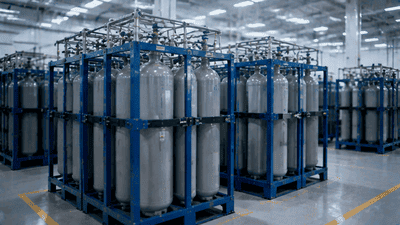
Electronic specialty gases play several critical roles in advanced-node processes. In etch, they serve as reactive species that selectively remove material in narrow trenches and highly directional profiles, often combined with inert carriers and diluents to fine-tune chemistry. In deposition, they act as precursors for films grown by CVD and ALD, controlling film composition, density, and interface quality.
In doping and implantation-related processes, certain gases influence carrier concentrations and junction properties. Chamber cleans and conditioning steps depend on gases that remove residues, protect surfaces, or pre-treat chambers before sensitive operations. Even minor changes in gas composition or impurity levels can alter process windows and yield outcomes.
At advanced nodes, this sensitivity amplifies the technical and strategic importance of specialty gas supply.
Purity and consistency: tightening specifications
As geometries shrink and devices adopt complex stacks, gas purity requirements tighten. Parts-per-billion or lower impurity levels may be necessary to avoid unwanted reactions, particle formation, or film defects. Consistency from cylinder to cylinder and lot to lot becomes critical for reproducible processes.
Advanced-node fabs specify detailed impurity profiles, moisture limits, and metallic contamination thresholds for each gas. Specialty gas suppliers respond with enhanced purification technologies, advanced analytical tools, and stricter quality control regimes. This raises production complexity and cost but is essential to meet the demands of cutting-edge processes.
High purity and consistency requirements are a key reason why advanced-node specialty gas usage cannot be easily substituted or downgraded without impact.
Volume growth: more wafers, more layers, more steps
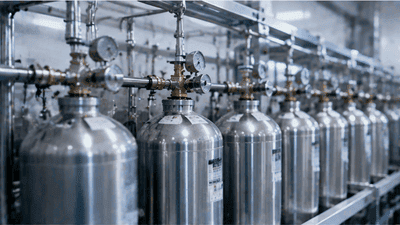
Beyond complexity, simple volume growth contributes to surging specialty gas usage. As global wafer starts increase, especially at nodes utilized by high-performance logic, memory, and AI-related chips, total gas consumption scales with throughput.
Advanced nodes also add layers and steps: more interconnect levels, more patterning cycles, more cleans. Each additional pass consumes gases in etch, deposition, and conditioning. Even if gas usage per step is optimized, the expanded process flows raise aggregate consumption.
Thus, the move to advanced nodes is a multiplier: growing wafer volumes plus more gas-intensive flows lead to significantly higher specialty gas requirements.
Why localization of gas supply is accelerating
Localization—building domestic or regional production and distribution capacity for specialty gases—is accelerating for several reasons. Semiconductor hubs seek to reduce dependence on distant suppliers and minimize exposure to logistics disruptions, geopolitical tensions, and export controls. Local production can shorten lead times, improve supply visibility, and support national industrial policy goals.
In parallel, the sheer importance of specialty gases in advanced-node processes motivates governments and companies to treat gas supply as strategic infrastructure rather than generic imported commodities. Investing in local gas plants, purification systems, and distribution networks becomes part of broader efforts to strengthen semiconductor ecosystems.
As a result, localization initiatives now frequently include specialty gases alongside equipment, wafers, and other critical inputs.
Elements of a localized gas ecosystem

A localized specialty gas ecosystem comprises several elements. Production facilities generate core gases and certain precursors, often near major fab clusters. Purification plants refine gases to electronic-grade standards and blend specialized mixtures. Distribution networks manage storage, cylinder logistics, bulk delivery systems, and on-site supply points.
Technical support teams work closely with fabs to ensure correct gas specifications, troubleshoot process issues, and help tune recipes for local supply realities. Regulatory and safety frameworks govern transport, storage, and usage, requiring coordination between industry and authorities.
Building this ecosystem takes time and investment, but once established, it provides a robust backbone for local semiconductor manufacturing.
Challenges in localizing advanced-node gases
Not all specialty gases are equally easy to localize. Some require specific precursor materials, proprietary synthesis routes, or specialized equipment that may not yet be widespread. For advanced-node chemistries, intellectual property constraints and technical know-how can make domestic production more complex.
Purification to extremely high standards demands sophisticated processes and metrology. Local suppliers must demonstrate reliability and performance equivalent to established global vendors before fabs will use them in critical layers. Qualification cycles can be lengthy, involving extensive process monitoring and reliability testing.
These challenges mean that localization often proceeds in stages: starting with more mature-node gases and gradually moving into more advanced chemistries as capabilities grow.
Interaction with equipment and process recipes
Specialty gas supply is tightly linked to equipment and process recipes. Etch and deposition tools are qualified for specific gas mixtures and flow conditions. Chamber materials and coatings are tuned for certain chemistries. Process engineers design recipes around known gas properties and behaviors.
When localization introduces new gas sources or slightly different formulations, recipes may need adjustment. Equipment vendors and fabs must collaborate with local gas producers to ensure compatibility and performance. In some cases, localized gases can even enable new optimizations—improved uniformity, reduced consumption, or better selectivity—if their characteristics are well understood.
This interdependence underscores that gas localization is not purely a supply-chain exercise; it is also a process and integration challenge.
Risk reduction: resilience against disruption
One of the main motivations for specialty gas localization is risk reduction. Global supply chains for gases can be vulnerable to port closures, transport bottlenecks, accidents at distant plants, or regulatory shifts affecting hazardous materials. Advanced-node fabs cannot easily pause production without risking missed deliveries and lost revenue.
Local gas capabilities provide buffers against such disruptions. Even if global markets experience temporary stress, domestic plants can continue serving nearby fabs, at least for core gases and standard mixtures. Combined with inventory strategies and diversified sourcing, localization strengthens overall resilience.
In this sense, rising gas usage magnifies the value of localization: the more critical and voluminous the gas demand, the more important it becomes to control and secure supply locally.
Cost and economics: balancing investments and savings
Economically, localizing specialty gas production involves trade-offs. Building plants, purification facilities, and distribution systems requires capital. Operating them at the high standards needed for advanced nodes adds ongoing costs. However, localized supply can reduce freight expenses, import duties, and exposure to currency fluctuations.
Effective localization strategies may lower total cost of ownership over time by optimizing logistics, reducing lead-time-related buffers, and improving coordination between supply and fab demand. For high-volume semiconductor clusters, scale effects help justify local investments, spreading fixed costs across substantial gas consumption.
Thus, surging gas usage at advanced nodes improves the economic case for localization, as the potential savings and resilience benefits apply to large volumes.
Environmental and safety considerations
Specialty gas usage and localization also raise environmental and safety considerations. Production, purification, and transport of gases must comply with strict safety standards due to flammability, toxicity, or other hazards. Local plants must incorporate robust safety systems, training, and emergency response plans.
Environmental impacts—including emissions, waste streams, and energy consumption—require management. Regions pursuing localization often integrate gas initiatives with broader sustainability efforts, aiming to minimize environmental footprint while supporting semiconductor growth.
Advanced-node fabs, which already track resource efficiency closely, increasingly consider gas suppliers’ environmental performance as part of their sourcing decisions.
Role of policy and industrial strategy
Governments and industrial policy bodies frequently play a role in accelerating specialty gas localization. As part of semiconductor support programs, they may offer incentives for building local gas plants, fund joint R&D initiatives, or streamline regulatory approvals for relevant facilities.
Policy can also encourage collaboration between local gas companies, universities, and fabs to develop new chemistries and purification methods. Long-term strategies might explicitly target key materials—among them advanced-node specialty gases—as areas where domestic capability is considered strategically important.
These policy moves align with broader objectives of reducing dependency on external suppliers and strengthening local industrial ecosystems tied to semiconductors.
Innovation opportunities in localized gas supply
Localization is not only about replicating existing supply; it also opens innovation opportunities. Local gas producers working closely with nearby fabs can co-develop tailored chemistries or optimization strategies for specific processes. Short feedback loops enable faster experimentation and refinement.
For example, localized suppliers might collaborate on new ALD precursors, improved etch gas mixtures for difficult materials, or more efficient chamber clean recipes that reduce downtime. These innovations can yield competitive advantages for local fabs and contribute to global technology progress.
As specialty gas usage grows, the value of such process-centric innovation increases, making localized supply both a resilience measure and a potential source of differentiation.
Stages of localization: from core gases to advanced precursors
In practice, localization tends to proceed in stages. Early efforts focus on core gases used across many nodes and processes—such as common etch and carrier gases—where production technology is well understood. Next, localized supply extends to more specialized mixtures and purified variants tailored to specific tool sets.
Advanced precursors for leading-edge deposition and etch processes often come later, as they require more complex synthesis and purification, along with rigorous qualification. Over time, the share of locally produced specialty gases in fab usage grows, though complete localization across all gas types may remain a longer-term goal.
Tracking which stages have been reached in a given region offers insight into how robust its gas ecosystem is for advanced-node manufacturing.
Implications for global suppliers and competition
For global specialty gas suppliers, accelerating localization introduces both competition and partnership opportunities. They may invest in local plants, joint ventures, or technology transfer arrangements to participate in domestic ecosystems. Alternatively, they may face emerging local competitors that aim to capture parts of the market, particularly at mature and mid-range nodes.
Global suppliers can differentiate through advanced chemistries, broad portfolios, and long experience with leading-edge fabs, while local firms may leverage proximity and policy support. Competitive dynamics will vary by region, but overall, surging gas usage and localization efforts encourage suppliers to refine their strategies and deepen collaboration with fabs.
In many cases, hybrid models combining global technology with local production and support prove effective.
Long-term outlook: gas usage and localization in future nodes
Looking ahead, as nodes become even more complex and new device architectures emerge, specialty gas usage is likely to continue rising. Processes such as selective deposition, area-selective etch, and new materials for interconnects and memory will rely on novel gas chemistries and precise delivery.
Localization trajectories will evolve in parallel. Regions that build strong specialty gas ecosystems can better support future nodes and advanced packaging schemes. Others may focus on specific segments or maintain more globalized models. Regardless, the strategic nature of gas supply will remain, anchored in its deep integration with critical processes.
Fabs, equipment vendors, and gas suppliers will need to collaborate closely to ensure that rising usage and localization both contribute to stable, high-performance manufacturing environments.
Conclusion: specialty gases at the intersection of technology and strategy
Electronic specialty gas usage has surged in advanced nodes because these materials underpin the most critical etch, deposition, and conditioning processes in modern semiconductor manufacturing. At the same time, localization of gas supply has accelerated as regions seek resilience, cost control, and strategic autonomy.
Together, these trends place specialty gases at the intersection of technology and strategy. Managing their usage and localization effectively is now a core part of building robust, competitive semiconductor ecosystems—one that will shape not only current advanced nodes but also the path toward future generations of devices and process innovations.