Wet Chemicals’ Purity Leap from G4 to G5 – Domestic Breakthrough Imminent
In semiconductor manufacturing, wet chemicals are often described as “silent enablers”. They do not appear in headlines like lithography scanners or etch tools, yet they touch almost every wafer in the fab—during cleaning, surface preparation, etching, stripping, and post-CMP processes. As device dimensions shrink and process windows tighten, the purity requirements on these wet chemicals rise dramatically. The industry’s move from G4-grade to G5-grade purity represents not just an incremental improvement in specifications, but a fundamental leap in how chemical supply, analytics, and process integration are conceived. Domestic breakthroughs in achieving and immersing fabs in G5 wet chemical ecosystems are now a key storyline in localization and yield enhancement.
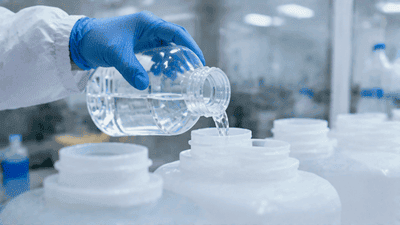
This blog post explores what the purity leap from G4 to G5 really means, why it has become critical for advanced nodes, how domestic suppliers are breaking through to meet these standards, and what “immersion” in a G5-grade environment implies for fabs, equipment, and national semiconductor strategies.
Wet chemicals in the semiconductor process flow
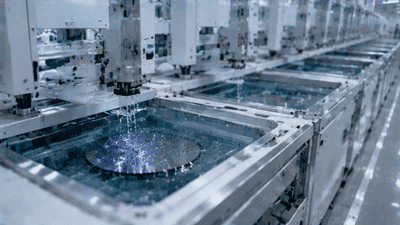
Wet chemicals are used throughout front-end and back-end processes. Typical applications include wafer incoming cleans, RCA cleans, particle and metallic contamination removal, oxide and nitride etches, photoresist stripping, post-etch and post-implant cleans, and post-CMP slurry and residue removal.
Common chemistries encompass acids (such as sulfuric, hydrochloric, nitric), bases (like ammonium hydroxide), oxidizers, complexing agents, surfactants, and specialized blends formulated for specific modules. Each chemical step aims to condition the wafer surface precisely—removing contaminants or films without damaging underlying structures or introducing new defects.
Because these steps occur many times across a process flow, even subtle impurities can accumulate or interact unfavorably, making purity grades crucial for advanced manufacturing.
Understanding purity grades: from G4 to G5
Purity grades like G4 and G5 are shorthand for comprehensive specifications covering particles, metallic contamination, organic impurities, anions and cations, dissolved gases, and other trace species in wet chemicals. G4-grade chemicals already exhibit high purity and are suitable for many mature-node and less demanding applications.
G5-grade raises the bar further: lower allowable particle counts, stricter limits on transition metals and alkali contaminants, and tighter control over organics and ionic species. The difference is not merely a single parameter; it is a across-the-board improvement in impurity levels, stability, and consistency lot to lot.
In practical terms, G5 aims to ensure that the wet chemical itself is no longer a significant contributor to defectivity or variability in advanced-node processes, supporting the ultra-low defect densities required for high-yield logic and memory devices.
Why advanced nodes demand G5 purity
At advanced nodes, critical dimensions and feature sizes reach scales where particles or molecular-level impurities can cause catastrophic defects. A particle that was harmless at larger geometries may block a trench, distort a line edge, or seed a void in a high-aspect-ratio feature. Metallic contaminants can alter device thresholds, leakages, or reliability characteristics.
Process integration becomes more sensitive to surface states and cleanliness. High-k dielectrics, complex gate stacks, and multi-level interconnects require carefully conditioned surfaces between each step. Wet chemicals are integral to setting these conditions; any impurity carried forward can compromise subsequent film growth or etch selectivity.
G5 purity responds to this heightened sensitivity, offering a level of chemical cleanliness that aligns with the defect and variability budgets of cutting-edge devices.
Defectivity: particles, metals, and organics
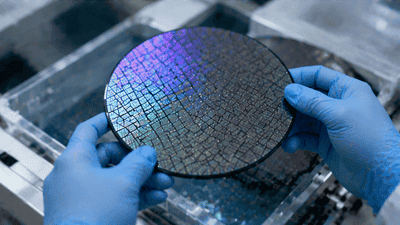
Defectivity in wet processes comes primarily from three broad impurity categories: particles, metallic ions, and organics. Particles can physically adhere to wafer surfaces, causing shorts, opens, or pattern distortion. Metallic ions can incorporate into films or interfaces, altering electrical properties and long-term reliability. Organics can form residues, interfere with film nucleation, or contribute to outgassing or contamination.
The leap from G4 to G5 purity involves tightening controls across all three. Particle filtration technologies are upgraded, with higher-efficiency filters and improved system designs to prevent re-introduction. Metallic contamination is reduced through better raw material selection, equipment design, and purification steps. Organics are controlled via distillation, carbon treatment, and advanced analytical monitoring.
This holistic reduction in impurity levels is what makes G5-grade chemicals a new baseline for advanced-node defect management.
Domestic breakthrough: building G5 capabilities
For domestic chemical suppliers, achieving G5-grade purity is a major technical and organizational milestone. It requires investment in high-purity production lines, state-of-the-art filtration and purification technologies, and cleanroom-level manufacturing environments tailored for wet chemical handling.
Raw materials must be sourced or refined to higher standards, and equipment surfaces must be engineered to minimize leaching or particle generation. In-line and off-line analytics are upgraded to detect trace impurities at parts-per-billion or lower levels, enabling real-time quality control. Quality systems are redesigned around ultra-high-purity requirements, with strict protocols for change control, lot traceability, and contamination incident management.
Domestic breakthrough immersion implies that these capabilities are not limited to pilot batches but are integrated into sustained production that supplies multiple fabs at scale.
Analytical leap: metrology for G5 chemicals
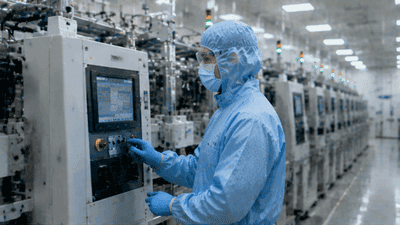
Purity improvements are only as meaningful as the ability to measure them. Moving to G5-grade chemicals demands advanced analytical metrology: high-sensitivity ICP-MS for metals, TOC analyzers for organics, particle counters capable of detecting sub-micron particles, and ion chromatography for anions and cations.
Domestic suppliers must develop or access laboratories capable of routine measurement at these levels, not just occasional research campaigns. Statistical process control is applied to impurity metrics, and feedback loops adjust production parameters to maintain stability. Fabs rely on this metrology to validate incoming lots and correlate chemical purity data with process performance.
The analytical leap is therefore a core part of the G4-to-G5 transition, underpinning confidence in the actual purity achieved.
Immersion in G5: fab-wide adoption
“Immersion” in G5-grade wet chemicals means more than using one or two high-purity products in isolated steps. It implies a fab-wide environment where all critical wet processes—core cleans, etches, strips, and post-CMP steps—use G5-grade or equivalent chemicals, minimizing cross-contamination risks.
Fabs re-evaluate their chemical lists, qualification strategies, and usage points to identify where G4-grade products may be upgraded to G5. They adjust storage, distribution, and point-of-use filtration systems to preserve purity from supplier to tool. Engineers analyze defect data and yield correlations to prioritize steps where G5 adoption produces the largest benefit.
Over time, a fab immersed in G5 wet chemical ecosystems can achieve lower baseline defectivity and tighter process control, contributing to stable high-yield operation at advanced nodes.
Process integration and recipe tuning
Introducing G5-grade chemicals often demands process integration work. Higher purity may modify reaction rates, surface conditions, or interaction with films, particularly when previous processes implicitly relied on certain impurity levels or side reactions. Recipe parameters—temperature, time, agitation, dilution ratios—may need adjustment to optimize outcomes with cleaner chemistries.
Domestic suppliers and fabs collaborate on this tuning, running test lots and evaluating defect maps, film characteristics, and electrical performance. In some cases, G5 chemicals enable new process windows: more aggressive contamination removal without surface damage, improved uniformity, or reduced variability across wafers and lots.
Process integration thus becomes a co-development exercise that turns purity into practical yield and performance gains.
Supply chain resilience and localization
Domestic breakthroughs in G5 wet chemicals directly support supply chain resilience. Fabs that rely heavily on imported high-purity chemicals face risks from logistics disruptions, currency fluctuations, and policy changes. Local suppliers capable of G5 production reduce these exposures and support national industrial strategies aimed at semiconductor autonomy.
Localization of wet chemical production also shortens lead times and simplifies coordination between suppliers and fabs. Issues can be addressed quickly, new products co-developed, and usage patterns optimized without long international feedback loops. This is particularly valuable during technology ramp phases where process conditions evolve rapidly.
As advanced-node manufacturing grows domestically, G5 wet chemicals become part of the critical infrastructure that underpins sustainable, robust production.
Cost and economics: balancing purity and efficiency
G5-grade chemicals typically cost more to produce than G4-grade due to additional purification steps, stringent raw material requirements, and enhanced quality control. For fabs, the question becomes whether higher chemical costs are offset by yield improvements, defect reductions, and fewer wafer-level issues.
Economic analyses often show that at advanced nodes, the cost of defects and yield loss far exceeds the incremental cost of higher-purity chemicals. A small reduction in defect density can translate into significant output gains and better parametric distributions. Domestic suppliers focusing on G5-grade production must nevertheless manage costs through efficient plant design, scale economies, and optimized logistics.
In practice, the G4-to-G5 transition often coincides with broader efforts to optimize wet process usage, reducing waste and overconsumption and thereby partially compensating for higher unit costs.
Environmental and safety considerations
Producing and using ultra-high-purity wet chemicals involves environmental and safety considerations. Waste streams from purification processes must be treated carefully to avoid environmental impact. High-purity plants may use more energy or specialized materials, requiring attention to sustainability metrics.
In fabs, handling of concentrated acids and bases at high purity still requires robust safety protocols: leak detection, proper personal protective equipment, emergency response plans, and containment systems. Domestic breakthroughs in G5-grade production are therefore often accompanied by investments in environmental and safety infrastructure.
Over the long term, some high-purity processes may enable reduction in overall chemical volumes or more efficient recirculation, contributing positively to sustainability as technology and practices mature.
Qualification and long-term reliability
Fabs must qualify G5-grade domestic chemicals thoroughly. Qualification typically includes process trials, defect monitoring, film and surface analyses, and reliability testing over extended timeframes. Engineers look for correlations between new chemicals and long-term device behavior: time-dependent dielectric breakdown, corrosion, stress migration, and other reliability modes.
Successful qualification builds confidence and paves the way for broader adoption. Domestic suppliers who consistently deliver G5-grade chemicals that meet reliability expectations gain preferred status and long-term contracts, while fabs benefit from stable, high-quality supply.
This qualification cycle is critical; breakthroughs are not just technical achievements but must be validated in the harsh realities of high-volume manufacturing.
Collaboration among suppliers, fabs, and research institutions
Achieving and industrializing G5-grade wet chemicals rarely happens in isolation. Domestic suppliers often work closely with fabs and research institutions to develop purification methods, measurement techniques, and application-specific formulations. Universities and national labs can contribute fundamental research on impurity effects and surface chemistry, supporting more targeted purity improvements.
Joint development projects may focus on specific process modules—such as pre-EPI cleans, FEOL surface treatments, or BEOL post-CMP cleans—where purity gains translate directly into performance. These collaborations help align chemical capabilities with process needs, accelerating the transition from G4 to G5 in practice.
Over time, such partnerships form the backbone of a domestic wet chemical innovation ecosystem, ensuring that purity advances continue beyond initial breakthroughs.
Future directions: beyond G5
While G5-grade purity represents a major leap, the trajectory of semiconductor scaling suggests that purity requirements will continue to evolve. Emerging device architectures, new materials, and more delicate interfaces may drive demand for even stricter impurity controls in certain applications or for entirely new classes of wet chemicals.
Future milestones might involve enhanced control over specific trace species known to impact novel materials, integration with in-situ monitoring in process tools, or combined chemical and physical treatments that further reduce surface defects. Domestic suppliers who have built G5 capabilities will be better positioned to pursue these next steps, as their infrastructure and expertise provide a foundation for further advances.
Thus, the G4-to-G5 leap should be seen as part of an ongoing evolution rather than an endpoint.
Conclusion: purity as a strategic lever in advanced manufacturing
The transition of wet chemicals from G4 to G5-grade purity, and the domestic breakthroughs that enable immersion in G5 environments, highlight the strategic role of materials in modern semiconductor manufacturing. Ultra-high-purity wet chemicals are now recognized as core contributors to yield, reliability, and process stability at advanced nodes.
For fabs, adopting G5-grade domestically produced chemicals means engaging deeply with process integration, qualification, and supplier collaboration. For domestic chemical producers, achieving G5 is a sign of technical maturity and a gateway to playing a central role in national semiconductor strategies. As devices become more complex and process windows tighter, the purity of wet chemicals will remain a decisive factor—and the G4-to-G5 leap a reference point for how far the industry has come and where it must go next.