Precursor Demand Explodes in ALD/CVD – Korean Suppliers Dominate
As semiconductor manufacturing races into ever more advanced nodes and complex device architectures, atomic layer deposition (ALD) and chemical vapor deposition (CVD) have become foundational processes for building precision films and 3D structures across logic, memory, and advanced packaging. With this shift, demand for electronic-grade precursors—the reactive molecules that form these films—has exploded. At the same time, Korean chemical and materials companies have steadily expanded their footprint, to the point where they now play a dominant role in supplying key ALD and CVD precursors to global fabs.
This blog post examines why precursor demand is surging, how ALD and CVD have reshaped materials requirements, what underpins the emerging dominance of Korean suppliers, and what this means for fabs, competitors, and the future of semiconductor materials localization.
ALD and CVD move to center stage
ALD and CVD are not new in semiconductor manufacturing, but their importance has grown dramatically with device scaling. CVD has long been used to deposit oxides, nitrides, and certain metals, providing relatively high throughput and uniform films. ALD, with its self-limiting surface reactions, excels at forming ultra-thin, conformal layers with precise thickness control and excellent step coverage.
As transistor gates evolved from planar structures to FinFETs and gate-all-around (GAA) architectures, and as memory stacks expanded vertically in 3D NAND and other devices, ALD and advanced CVD became indispensable. They can reliably coat deep, narrow trenches and complex 3D surfaces in ways traditional deposition methods struggle to match.
These technical advantages have translated directly into higher precursor usage, because every ALD or CVD step depends on carefully selected, ultra-pure molecules tailored to specific films.
Why precursor demand is exploding
Several structural changes in semiconductor processes explain the surge in precursor demand. First, the number of deposition steps per wafer has increased. Advanced logic nodes and 3D memory architectures use more layers, more interfaces, and more complex stack designs than their predecessors. Each additional film deposited by ALD or CVD consumes precursors.
Second, new materials have entered mainstream production. High-k dielectrics, metal gates, advanced barrier layers, and engineered interfaces all require specialized precursors with precisely controlled chemistry. Many of these materials are deposited by ALD or closely related techniques, which rely on specific organometallic or inorganic compounds rather than generic gases.
Third, tighter performance and reliability requirements demand cleaner, better-controlled films. Precursor quality and chemistry directly influence film density, stoichiometry, impurity levels, and interface properties, driving fabs to use higher volumes of carefully qualified, specialized molecules rather than more generic alternatives.
From bulk gases to tailored molecules
Traditional deposition often relied on relatively simple gases such as silane, ammonia, or basic metal-organic compounds. In contrast, many modern ALD and CVD processes use tailored precursors designed for specific reactions: particular metal centers, ligand structures, and volatility profiles tuned to achieve desired growth characteristics.
For example, precursors for high-k metal oxides, barrier metals, or advanced interconnect liners may use complex organometallics that decompose cleanly at narrow temperature windows and show minimal unwanted side reactions. Precursors for 3D NAND or other deep-trench structures must balance volatility, reactivity, and conformality in challenging geometries.
This shift from bulk gases to tailored molecules has expanded the precursors portfolio dramatically, increasing demand not only in volume but also in diversity of products and specialized formulations.
ALD’s unique precursor demands
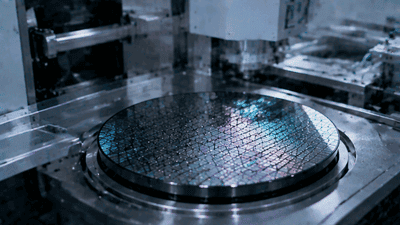
ALD’s operating principles impose unique demands on precursors. Because ALD relies on self-limiting surface reactions in alternating pulses, each precursor must satisfy strict criteria: adequate volatility, controlled chemisorption on the surface, clean removal of ligands during subsequent exposure steps, and minimal gas-phase reactions that lead to particles or uncontrolled growth.
These requirements narrow the range of viable molecules for any given film. They also heighten the importance of precursor purity and consistent manufacturing. Subtle variations in precursor composition or impurity profiles can alter ALD growth per cycle, film uniformity, and defectivity.
As fabs roll out more ALD-based modules across logic, DRAM, and 3D NAND flows, the total demand for such high-specification precursors increases substantially, and suppliers with deep ALD expertise gain a clear advantage.
Korean suppliers’ rise: industrial and ecosystem strengths
The growing dominance of Korean precursor suppliers is rooted in several strengths. Korea has long been home to major memory and logic fabs that aggressively adopt advanced process technologies, creating local demand for cutting-edge materials. Domestic chemical and materials companies responded early, developing close relationships with these fabs and building specialized product lines for ALD and CVD.
Over time, Korean firms invested heavily in R&D, production infrastructure, and analytical capabilities focused specifically on electronic-grade precursors. They built portfolios aligned with the needs of leading-edge DRAM, 3D NAND, and logic producers, then expanded those portfolios to serve global customers.
The result is a cluster of suppliers with strong technological capabilities, tight integration with top-tier fabs, and a track record of delivering advanced precursors at scale—key ingredients for dominance in a fast-growing market.
Co-development with leading fabs
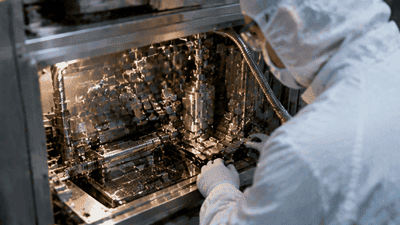
One of the most powerful engines for Korean suppliers’ rise has been co-development with leading semiconductor manufacturers. As Korean fabs pursued aggressive scaling in memory and logic, they engaged local materials partners to jointly develop precursors for new films and processes.
Through these collaborations, precursor suppliers gained early visibility into process roadmaps, performance targets, and integration challenges. They could iterate quickly on molecule design, impurity control, and packaging to meet fab requirements, often qualifying new precursors in pilot and high-volume lines alongside process engineers.
This co-development model not only produced precursors matched to advanced nodes, but also built trust and deep process knowledge within Korean supplier organizations, positioning them strongly in global ALD/CVD markets.
Manufacturing quality and purification capability
Dominance in precursors is not just about designing molecules; it requires manufacturing them at ultra-high purity and consistent quality. Korean suppliers invested in specialized synthesis plants, purification systems, and quality-control laboratories dedicated to electronic-grade precursors. These facilities use advanced distillation, chemical purification, and proprietary processes to remove trace metals, moisture, oxygen, and other impurities that can compromise films.
They also deploy high-sensitivity metrology—such as ICP-MS, GC-MS, and other analytical tools—to characterize precursor quality down to parts-per-billion or lower levels. Stable, repeatable synthesis and purification routines ensure that fabs receive consistent precursors across lots and time.
Without such manufacturing depth, meeting the stringent purity and reliability standards of advanced ALD and CVD processes would be difficult, making these capabilities core to Korean suppliers’ competitive edge.
Packaging, logistics, and on-site support
Precursors are not delivered in isolation; packaging and logistics matter greatly. Many ALD and CVD precursors are sensitive to air, moisture, or temperature and must be stored and transported under controlled conditions. Korean suppliers have refined cylinder and canister designs, valve systems, and delivery interfaces to ensure safe, reliable handling in fabs.
They also provide on-site support for installation, qualification, and troubleshooting of precursor delivery systems. Close collaboration with gas and chemical delivery equipment vendors allows them to integrate precursors smoothly into existing infrastructure and maintain high safety standards.
This combination of robust packaging, logistics, and technical support further strengthens their position, reducing barriers for fabs to adopt their products and reinforcing long-term relationships.
Portfolio breadth across logic and memory
Korean suppliers have expanded their precursor portfolios to cover a wide range of films and applications. In logic, they offer precursors for high-k gate dielectrics, metal gates, spacers, liners, and contact materials. In DRAM, they supply molecules for capacitor dielectrics, electrode layers, and various barrier and interface films. In 3D NAND, they deliver precursors for oxide and nitride layers in tall stacks, as well as for select gate materials and other critical films.
By covering multiple applications across different device types, they become versatile partners for fabs operating mixed product lines. This breadth reduces the need for fabs to manage many small suppliers and simplifies qualification and support structures.
As a result, Korean companies increasingly serve as one-stop shops for ALD and CVD precursors at advanced nodes, reinforcing their dominant role in this market segment.
Competitive landscape: global players and challengers
Despite the strong position of Korean suppliers, the precursor market remains globally competitive. Large multinational chemical companies and specialized niche players also develop and supply ALD/CVD precursors, often focusing on particular material families, nodes, or regions. Some emphasize strength in specific metals or dielectrics; others aim at localized supply in North America, Europe, or other Asian countries.
Nonetheless, Korean suppliers’ ability to marry advanced process knowledge, robust manufacturing, and close ties with leading fabs has allowed them to capture a significant share in the most demanding segments. Global competitors must match this combination or carve out distinct niches where they can differentiate on innovation, integration, or regional strategy.
The overall picture is one of intense but uneven competition, with Korean companies particularly strong in high-volume, cutting-edge memory and logic applications.
Implications for fabs: security, cost, and performance
For fabs, the rise of dominant precursor suppliers has several implications. On the positive side, working with experienced Korean suppliers can simplify precursor sourcing, streamline co-development of new materials, and improve confidence in quality and performance. Established partners often offer comprehensive technical support and quick responsiveness to process issues.
However, concentration of supply also raises questions about security and diversification. Fabs and policymakers may seek to avoid over-dependence on any single region or supplier, especially for critical materials tied closely to device performance. This encourages multi-sourcing strategies, localized production initiatives, or joint ventures in other regions.
Balancing the benefits of deep partnerships with Korean suppliers against broader risk management goals will remain a key strategic consideration for leading fabs.
Localization trends and regional strategies
As semiconductor manufacturing localization accelerates in multiple regions, precursors come into focus as strategic materials. Governments and industry consortia in North America, Europe, and other parts of Asia increasingly discuss building domestic capabilities for key ALD/CVD precursors, aiming to reduce dependence on imported supplies and strengthen local ecosystems.
Korean suppliers may respond by establishing overseas plants, technology licensing deals, or joint ventures, combining their expertise with local manufacturing presence. Regional players may also invest in precursor R&D and production, targeting specific niches or materials where they can gain a foothold.
In the medium term, this could produce a more distributed global precursor production network, but Korean companies’ existing technological and relationship advantages will likely keep them central in advanced-node supply for some time.
Innovation trajectories: new materials and processes
Looking ahead, the evolution of ALD and CVD will continue to drive innovation in precursors. New device architectures—such as more complex GAA structures, advanced interconnect schemes, and heterogeneous integration—will demand novel films and interfaces. Selective deposition, area-specific growth, and low-temperature processes for sensitive substrates will require precursors with finely tuned reactivity and stability.
Korean suppliers are well positioned to participate in these innovation trajectories, given their experience with co-development and their strong R&D bases. They—and their global peers—will need to create molecules that can meet emerging requirements while remaining manufacturable at high purity and reasonable cost.
The companies that succeed in this next wave of precursor innovation will shape not only materials markets but also the practical feasibility of future semiconductor process flows.
Conclusion: precursors at the heart of advanced manufacturing
The explosion in ALD and CVD precursor demand reflects the broader transformation of semiconductor manufacturing: more layers, more complex 3D structures, and more precise material engineering at advanced nodes. Within this environment, Korean suppliers have emerged as dominant players, combining advanced chemistry, rigorous manufacturing, and close partnerships with leading fabs to build strong positions across logic and memory applications.
For the industry, precursors are no longer a peripheral concern; they sit at the heart of key process modules and carry strategic importance for performance, yield, and supply-chain resilience. As ALD and CVD continue to expand, the role of Korean precursor suppliers—and the competitive and localization dynamics around them—will remain central to how the next generation of semiconductor technologies is developed and produced.