The Irreplaceability and Supply Risks of High-Purity Quartz in Monocrystal Pulling
High purity quartz is one of those quietly indispensable materials that sit at the foundation of modern semiconductor manufacturing. In monocrystalline silicon pulling—whether via the Czochralski (CZ) process or related techniques—quartz components shape, contain, and protect the molten silicon from contamination and structural defects. Without reliable access to ultra‑clean quartz crucibles and related parts, the global wafer supply chain would struggle, regardless of how advanced lithography, etch, or deposition tools become.
This blog post explores why high purity quartz is effectively irreplaceable in monocrystalline pulling today, how its material properties and manufacturing constraints create unique supply risks, and what fabs, wafer makers, and policymakers can do to manage these risks in a world increasingly concerned about supply chain resilience.
Monocrystalline pulling: why the crucible matters
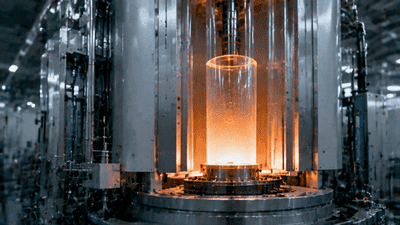
Monocrystalline silicon pulling is the starting point for most mainstream semiconductor wafers. In the CZ process, high‑purity polysilicon is melted in a crucible, and a seed crystal is dipped into the melt and slowly pulled upward while rotating. Under precise thermal and mechanical control, a single large silicon ingot (boule) forms, which is later sliced into wafers.
The crucible that holds the molten silicon must withstand extreme temperatures, maintain structural integrity, and avoid introducing impurities into the melt. It also must support controlled thermal gradients and smooth interfaces with surrounding furnace components. High purity quartz has proven uniquely suited to this role, making it the default crucible material for mainstream monocrystalline pulling.
Because every wafer ultimately traces back to an ingot formed in such a crucible, the material choice for this component has wide‑ranging consequences.
Essential properties of high purity quartz
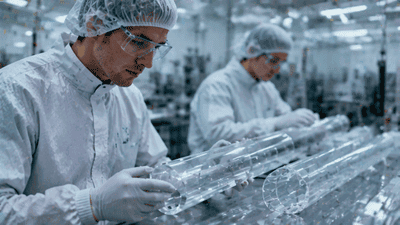
High purity quartz combines several critical properties. It has a high softening temperature, allowing it to contain molten silicon in the 1400–1500°C range without catastrophic deformation. Its thermal expansion characteristics and mechanical behavior under heat are well understood, enabling controlled furnace designs.
Equally important, high purity quartz can be refined to extremely low levels of metallic and particulate contamination. Trace impurities such as aluminum, iron, or alkali metals can alter the electrical properties and defect structures in pulled silicon; quartz’s ability to reach ultra‑low impurity levels makes it suitable for advanced device nodes.
The combination of thermal robustness and chemical cleanliness is central to its irreplaceability in crucible applications.
Interface chemistry between quartz and molten silicon
The interface between molten silicon and the quartz crucible is a complex chemical environment. Quartz can gradually react with the melt, forming a thin layer of silicon dioxide and influencing oxygen content in the crystal. This controlled oxygen incorporation can actually play beneficial roles in certain device applications, such as improving mechanical strength or influencing defect behavior.
Materials that do not share quartz’s interface chemistry might either introduce undesirable impurities or fail to provide controlled oxygen behavior. This makes straightforward substitution challenging: new materials would require extensive re‑engineering of crystal growth recipes and device integration strategies.
Thus, quartz’s specific interaction with silicon is not just tolerated but often deliberately integrated into ingot design assumptions.
Geological and industrial constraints on quartz supply
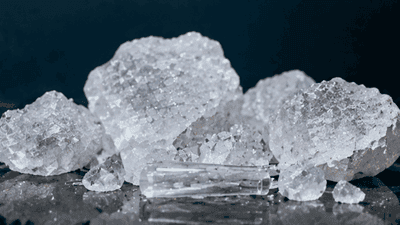
High purity quartz does not come from generic sand deposits. It typically originates from specific geological formations with naturally low levels of impurities and favorable crystal structures. Only a limited number of mines worldwide produce quartz suitable as feedstock for ultra‑pure crucibles and other semiconductor components.
From these mines, quartz must undergo multiple refining steps: crushing, sorting, chemical purification, and thermal treatment. Each step must preserve purity and avoid introducing new contaminants. Specialized industrial processes and tight quality control are required, and not all raw quartz can be upgraded to the highest grades needed for advanced pulling.
This constrained feedstock and demanding refinement chain create inherent supply risks: few sources, complex processing, and limited capacity expansion options.
Manufacturing of quartz crucibles: precision under stress
Producing crucibles for monocrystalline pulling involves shaping and fusing quartz into large, thin‑walled vessels that can withstand thermal shock and mechanical loads. Manufacturing defects—bubbles, inclusions, cracks—can lead to crucible failure, which in turn can cause ingot loss or furnace damage.
Crucible producers must combine precision forming techniques with careful annealing and inspection. Dimensional accuracy, wall thickness uniformity, and surface quality all affect furnace performance and ingot quality. Scaling production while maintaining these standards is not trivial.
Consequently, crucible manufacturing capacity tends to be concentrated among a small number of experienced vendors, each with specialized equipment and know‑how—another factor in supply risk.
Irreplaceability: why alternatives are so hard
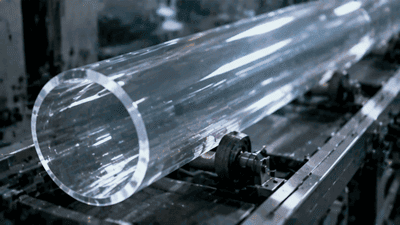
In principle, other high‑temperature materials could be considered: ceramics, refractory metals, or composite structures. In practice, each alternative faces major obstacles. Many ceramics cannot reach the same purity levels, introducing undesirable dopants or defects into the silicon. Refractory metals may dissolve into or react with the melt, contaminating the ingot or causing interface instability.
Composite approaches—such as liners inside different structural materials—add complexity and new failure modes. Achieving the same combination of purity, interface chemistry, thermal behavior, and manufacturability as quartz has proven extremely difficult, especially at the scale and cost required for mainstream wafer production.
As a result, quartz remains effectively irreplaceable in current monocrystalline pulling infrastructure, with alternatives relegated to niche or experimental roles.
Single‑point and regional concentration risks
Supply risks are amplified when high purity quartz mining and crucible manufacturing are concentrated in specific regions or companies. Natural events—earthquakes, floods, or other disruptions—can affect multiple facilities simultaneously. Political or trade tensions may also impact cross‑border movement of raw quartz or finished crucibles.
Because wafer producers rely on continuous crucible supply to keep pulling lines running, disruptions at a few key suppliers can quickly cascade into wafer shortages. Lead times for crucibles are not negligible, and qualifying new suppliers or mines is a long and costly process.
This single‑point vulnerability is a major supply chain concern, particularly as global wafer demand continues to grow.
Quality drift and its impact on crystal performance
Even when supply is available, quality drift in quartz can pose risks. Slight increases in certain impurities or changes in quartz microstructure may alter oxygen incorporation, defect formation, or stress patterns in pulled ingots. Device performance and yield can suffer in subtle ways that are hard to diagnose.
Wafer makers monitor ingot properties carefully and often correlate changes in crystal behavior with crucible batches, refining steps, or raw quartz sources. Maintaining stable quality over time requires vigilant process control and thorough metrology at quartz suppliers.
Any relaxation in these controls can compromise advanced device nodes, illustrating that quartz supply risk is not only about quantity but also about consistent quality.
Wafer makers’ mitigation strategies
Wafer producers adopt several strategies to manage quartz‑related risks. Multi‑sourcing—qualifying more than one crucible supplier or quartz feedstock source—helps reduce dependence on any single vendor. However, multi‑sourcing is constrained by the limited number of high‑purity quartz producers and crucible manufacturers that can meet demanding specifications.
Wafer makers also maintain safety stocks of crucibles and monitor supplier performance closely, including impurity profiles, mechanical integrity, and dimensional consistency. They may run periodic trials with alternative crucible designs or different quartz batches to understand potential process windows and fallback options.
These measures mitigate but do not eliminate the fundamental risks inherent in relying on a scarce, specialized material.
Upstream collaboration and transparency
Managing quartz supply risk increasingly depends on upstream collaboration. Quartz miners, refiners, and crucible manufacturers engage in more transparent communication with wafer producers, sharing information on resource constraints, planned capacity expansions, and quality trends.
Joint efforts may include co‑investment in new refinement facilities, shared R&D projects on improved crucible designs, or long‑term agreements that align capacity planning with wafer demand forecasts. Such collaboration helps ensure that quartz supply evolves in step with monocrystalline pulling needs.
In this sense, quartz becomes not just a commodity input but a strategic partner in wafer supply planning.
Environmental and regulatory dimensions
Quartz mining and refining must comply with environmental and safety regulations. Stricter rules on land use, waste disposal, or emissions can affect capacity expansion or even limit operations at existing sites. While these regulations aim to protect ecosystems and communities, they can also tighten quartz supply if new sources are hard to develop or existing ones face constraints.
Crucible manufacturing likewise must address energy consumption, potential emissions, and worker safety. Investments in cleaner processes and more efficient furnaces can improve sustainability but may require capital and time, potentially impacting short‑term capacity.
Balancing environmental responsibility with supply resilience is a complex challenge for quartz and crucible producers and the wafer industry that depends on them.
Strategic stockpiling and risk planning
Given quartz’s irreplaceability, some wafer producers and regions consider strategic stockpiling and risk planning. Holding additional crucible inventory, diversifying supplier geography, or investing in backup mining and refining capacity are all possible measures. These approaches aim to cushion the impact of sudden disruptions and buy time for alternative arrangements if needed.
Strategic planning may also include scenario analysis: modeling the effects of quartz shortages on wafer output and exploring prioritized production plans for critical devices. Such exercises highlight how deeply quartz availability is tied to broader semiconductor supply and can guide contingency strategies.
While stockpiling cannot solve structural scarcity, it can reduce the immediate shock of unexpected events.
Prospects for material innovation and partial substitution
Research continues into potential alternatives or supplements to high purity quartz. Ideas range from composite crucibles with protective liners to advanced ceramics engineered for cleaner interfaces. Some efforts focus on improving quartz itself—better refining methods, modified crucible designs to minimize reactions, or new furnace architectures that reduce stress on quartz components.
However, any innovation must meet stringent requirements for purity, thermal behavior, and interface chemistry, and must be proven over long production times. This makes rapid substitution unlikely. More realistic near‑term progress lies in improving quartz utilization efficiency, extending crucible life, or reducing defect sensitivity through process tweaks.
In practice, such innovations complement rather than replace high purity quartz, reinforcing its central role while subtly reducing risk.
Conclusion: quartz as a hidden cornerstone of wafer supply
High purity quartz is both irreplaceable and vulnerable in the context of monocrystalline silicon pulling. Its unique combination of thermal stability, chemical cleanliness, and interface behavior with molten silicon has made it the crucible material of choice, and no alternative currently matches its performance at scale.
At the same time, limited geological sources, complex refining and manufacturing, and quality sensitivities create significant supply risks. For wafer makers and the wider semiconductor industry, recognizing quartz as a hidden cornerstone of wafer production is essential to effective risk management. Through multi‑sourcing, upstream collaboration, careful planning, and sustained innovation, the industry can better safeguard this critical material—even as it continues to depend on it for the reliable production of monocrystalline silicon at the heart of modern electronics.