Critical Localized Components for Gas Delivery Systems
In modern semiconductor fabs, high purity gases are as essential as wafers and photoresists. They feed etch tools, deposition chambers, cleans, and many specialized processes that define device performance and yield. Behind every gas line in the fab is a complex gas delivery system, built from numerous components that must maintain purity, control flow precisely, and ensure safety in an environment where even parts-per-billion contamination can matter. As regions pursue semiconductor localization, attention increasingly turns to “critical localized components” within these gas delivery systems. Localizing these elements is central to building resilient, self-sufficient manufacturing ecosystems.
This blog post examines what makes gas delivery systems so demanding, which components are particularly critical, why localization of those components is strategically important, and how emerging local suppliers can position themselves to support advanced fabs without compromising performance or safety.
Gas delivery’s role in semiconductor manufacturing
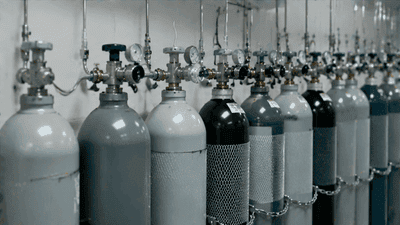
Gas delivery systems transport process gases from bulk storage—cylinders, tanks, or on-site generators—to individual tools on the fab floor. Along the way, gases must remain ultra-clean, controlled at precise pressures and flow rates, and isolated from leaks, backflow, and unintended mixing. These systems handle inert gases, reactive chemistry, toxic and pyrophoric materials, and high-concentration process fluids under strict safety protocols.
Any problem in gas delivery—contamination, unstable flow, or safety incidents—can impact multiple tools at once, reducing yield or even forcing fab shutdowns. For this reason, gas delivery hardware is engineered with redundancy, robust materials, and rigorous qualification, making its components some of the most critical infrastructure in the fab.
Localization efforts must therefore focus on maintaining, or improving, this high standard while shifting production closer to the fabs they serve.
What “critical localized components” really means
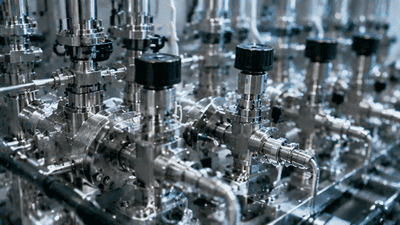
Critical components are those whose failure or degradation directly affects safety, gas purity, or process performance. They include valves, regulators, mass flow controllers, filters, purifiers, manifolds, and various fittings and connectors. Localizing these components means developing domestic or regional manufacturing and support capabilities for items that historically have been imported from a small set of global suppliers.
Not every piece of metal in a gas line is equally critical. Simple brackets or generic tubing can be sourced relatively easily. By contrast, high-integrity valves and mass flow controllers require specialized design and manufacturing to meet semiconductor-grade standards. Localization priorities therefore concentrate on these complex, high-impact elements.
When these components are produced locally with comparable quality, fabs reduce logistical risk and strengthen their ability to operate independently of long global supply chains.
Ultra-high purity valves and regulators
Valves and pressure regulators sit at the heart of gas delivery networks. They start, stop, and modulate gas flow, isolate segments for maintenance, and help maintain consistent pressures across different parts of the system. In semiconductor applications, these devices must meet ultra-high purity standards: minimal dead volume, smooth internal surfaces, corrosion-resistant materials, and seals that do not outgas or shed particles.
Localized production of such valves and regulators demands advanced machining, surface treatment, and assembly capabilities. Manufacturers must select appropriate alloys, apply electropolishing or other finishing processes, and ensure leak-tight sealing at the pressures and gas chemistries relevant to fabs. The engineering and quality requirements make these components a key focus in localization programs.
When domestic suppliers master ultra-high purity valve and regulator technology, they become foundational partners for regional gas delivery infrastructure.
Mass flow controllers: precision at the tool interface
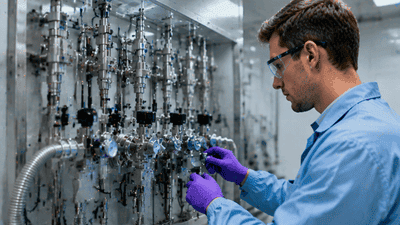
Mass flow controllers (MFCs) govern the exact amount of gas delivered to each tool process chamber. They measure and adjust flow in real time, responding to setpoints from tool control systems. At advanced nodes, extremely tight flow tolerances are needed to maintain repeatability in etch, deposition, and other gas-driven processes.
Critical localized MFCs must combine high-accuracy sensors, responsive control electronics, stable calibration, and gas-contact materials that preserve purity. They also must integrate smoothly with tool communication protocols and process recipes. Building such devices locally is challenging: it requires expertise in both fluid dynamics and control engineering.
Nevertheless, successful localization of MFCs can dramatically reduce dependence on imported precision flow control hardware and enable faster response to local fab needs.
Filters and purifiers: protecting purity
Gas filters and purifiers remove particles and chemical impurities before gases reach tool chambers. For sensitive processes—such as ALD, advanced CVD, or critical etch—trace contaminants can alter film properties or lead to defects. Filtration elements typically use high-efficiency media and carefully engineered housings to avoid introducing new contamination.
Purifiers go further, using reactive media or membrane technologies to strip oxygen, moisture, hydrocarbons, or specific contaminants from gas streams. Localizing these components requires access to high-purity media, precise assembly processes, and advanced analytical capabilities to verify performance at low contaminant levels.
Domestic filter and purifier producers that meet these standards can become critical sources of process reliability and yield, making them prime candidates for inclusion in gas delivery localization strategies.
Manifolds, panels, and distribution assemblies
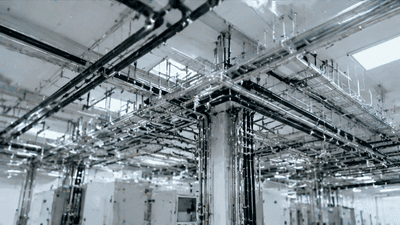
Gas cabinets, valve manifold boxes (VMBs), and distribution panels act as organized hubs in gas delivery systems. They house valves, regulators, MFCs, filters, and safety devices in standardized configurations that simplify installation and maintenance. The mechanical layout, welding quality, internal surface treatments, and integration of sensors all contribute to system performance.
Localized fabrication of these assemblies entails high-quality stainless steel welding, precise machining, leak testing, and adherence to safety standards for handling toxic and flammable gases. These assemblies are critical because they form the physical backbone of gas distribution, and any defect can affect multiple lines.
Regional suppliers capable of producing complete, qualified gas panels and cabinets reduce reliance on imported assemblies and can customize designs for local fab preferences and regulations.
Tubing, fittings, and connectors: seemingly simple, quietly critical
Stainless steel tubing, VCR or other high-integrity fittings, and specialized connectors might appear less sophisticated than valves or MFCs, but they are crucial to maintaining system integrity. Every joint is a potential leak or contamination site; every bend can influence pressure and flow behavior.
Localization of these components revolves around achieving consistent metallurgy, smooth internal surfaces, reliable sealing technologies, and robust quality control for dimensions and cleanliness. While tubing and fittings are somewhat closer to commodity products, semiconductor-grade requirements still impose high standards.
Local suppliers that understand these standards and align their manufacturing with semiconductor expectations can play a major role in building dependable gas delivery networks within a region.
Sensors, alarms, and safety-related components
Gas delivery systems incorporate sensors for pressure, flow, leakage, and gas concentration, along with alarms and emergency shutoff mechanisms. These components are critical to safety: they detect abnormal conditions, help prevent accidents, and support regulatory compliance for hazardous gas handling.
Localized development of safety-related components involves combining sensor technologies with robust hardware packaging and reliable communication interfaces. For certain gases—such as toxic or pyrophoric materials—accuracy and response time are vital. Local suppliers must also navigate regional safety standards and certification processes.
When these safety-critical components are available domestically, fabs and gas system integrators gain more flexibility and resilience in building and maintaining gas delivery infrastructure.
Engineering standards and qualification for localized components
Critical gas delivery components cannot be localized simply by reproducing mechanical shapes. They must meet stringent engineering standards: leak rates, pressure ratings, corrosion resistance, outgassing limits, particle generation, and more. Qualification involves laboratory tests, long-term reliability studies, and in-fab trials under realistic operating conditions.
Domestic suppliers seeking to localize must establish robust quality systems, advanced metrology, and traceability for materials and processes. Fabs will demand evidence of performance through test data, process audits, and pilot installations before approving localized components for broad use.
This qualification barrier is high, but once overcome, it strengthens trust between local suppliers and fabs, forming the basis of long-term partnerships.
Integration with tool OEM requirements
Gas delivery components not only serve fabs; they must also integrate seamlessly with tool original equipment manufacturers (OEMs). Tool designs often specify particular interface standards, flow characteristics, and communication protocols for MFCs, valves, and sensors. Localized components must match or exceed these specifications to be accepted in new tools or retrofits.
This integration drives close collaboration between component suppliers, tool OEMs, and fabs. Domestic producers that invest in supporting OEM requirements—through joint testing, interface standard compliance, and documentation—gain better access to the installed base of equipment and future tool generations.
Such alignment is a key success factor in building a viable localized gas delivery ecosystem that spans from bulk supply to tool chambers.
Supply chain resilience and strategic localization
Global disruptions, longer shipping times, and geopolitical uncertainties have highlighted vulnerabilities in gas delivery supply chains. Critical components sourced from distant regions may face delays or shortages, directly affecting fab operations. Strategic localization aims to mitigate these risks by building regional manufacturing and service capabilities.
By localizing valves, MFCs, filters, manifolds, and key safety components, regions can reduce dependence on single-source imports and respond more quickly to local fab needs. Localization does not necessarily mean complete independence, but rather a balanced, diversified supply model that can withstand shocks.
Gas delivery components are a natural focus for such strategies because they occupy a small but highly consequential part of the overall materials and equipment universe.
Challenges and trade-offs in localization
Localizing critical gas delivery components involves trade-offs. Building domestic capabilities requires capital investment, talent development, and time to accumulate process know-how. In early stages, local suppliers may struggle to match the performance or breadth of established global players, and fabs must carefully manage risk during qualification.
There is also a scale challenge: some components are economical only at certain production volumes. Regions with limited fab activity must weigh the benefits of local production against the costs of small-batch manufacturing. Strategic partnerships, regional consolidation, or export-oriented strategies can help address this issue.
Despite these challenges, the long-term benefits of more resilient, responsive gas delivery supply chains often justify deliberate, phased localization efforts.
Role of standards, training, and ecosystem building
Successful localization of gas delivery components depends not just on manufacturing but also on standards and training. Common technical and safety standards help ensure that domestic components are interoperable and reliable. Training programs for engineers and technicians improve installation, maintenance, and troubleshooting practices in fabs and service companies.
Building an ecosystem—where universities, research institutes, suppliers, integrators, and fabs collaborate—supports continual improvement in localized components. Shared testbeds, best-practice knowledge, and cross-company forums accelerate progress and reduce duplicated effort.
Over time, such ecosystems can raise domestic component capabilities to global best-practice levels, turning initial localization projects into lasting strengths.
Conclusion: gas delivery components as a cornerstone of localized fabs
Critical localized components for gas delivery systems—valves, regulators, mass flow controllers, filters and purifiers, manifolds, fittings, sensors, and safety devices—form a quiet but vital cornerstone of semiconductor manufacturing. Their performance directly influences gas purity, process stability, and safety across the fab.
As regions pursue greater semiconductor self-sufficiency, these components deserve focused attention. Localizing them requires advanced manufacturing, rigorous qualification, and close collaboration with fabs and tool OEMs, but the payoff is stronger supply chain resilience and greater control over core process infrastructure. In the long run, robust domestic gas delivery component ecosystems will be as important to localized fabs as any high-profile tool or material, ensuring that the invisible arteries of the fab remain reliable, safe, and aligned with regional strategic goals.