Storage

ESG Controversies in Memory Industry: Balancing High Energy Consumption with Recycling Tech

The memory industry sits at the heart of modern digital life, powering everything from smartphones to data centers and AI clusters. At the same time, it is one of the most energy‑intensive and resource‑heavy segments of the semiconductor world. This combination makes memory a focal point in ESG (Environmental, Social, and Governance) debates. On one side, critics point to soaring energy consumption, substantial carbon footprints, and complex supply chains.
Chinese Memory Module Makers Gain Global Market Share Against the Odds

In the span of a decade, Chinese memory module makers have moved from relative anonymity on the global stage to becoming recognized competitors in DRAM and NAND module markets worldwide. Against the odds—facing technology barriers, brand perception challenges, and geopolitical headwinds—they have steadily gained share in PCs, servers, mobile devices, and consumer electronics. Their rise is reshaping the competitive landscape, supply chain dynamics, and price–performance expectations in the memory ecosystem.

DDR5 Penetration Exceeds 80% in 2026 – Profit Elasticity Forecast for Module Makers

By 2026, DDR5 has effectively become the mainstream standard in the global DRAM module market, with penetration surpassing 80% across PCs, servers, and high‑end workstations. This rapid shift reflects both technological necessity—higher bandwidth, improved power efficiency, and greater capacity per DIMM—and a coordinated ecosystem transition involving CPU vendors, motherboard manufacturers, memory chip suppliers, and module makers.

MRDIMM vs. RDIMM: Technology Comparison and Server Adoption Rates for DDR5

The transition to DDR5 in servers is not just a speed and capacity upgrade; it is also a change in how memory modules are architected and integrated into platforms. Registered DIMMs (RDIMM) are the established workhorse of server memory, but DDR5’s more complex signaling, higher data rates, and power delivery changes have opened the door to new module types such as MRIMM (Memory Riser/Expansion Module concepts).

NAND Flash Prices Rise for 5 Consecutive Quarters, Enterprise SSDs as Main Engine

After a prolonged downturn in the memory cycle, NAND flash prices have climbed for five consecutive quarters, marking a decisive shift in market dynamics. The key driver behind this sustained upswing is not the consumer segment but enterprise solid‑state drives (SSDs), which have emerged as the main engine of demand and pricing power. As hyperscale data centers, cloud service providers, and large enterprises expand storage capacity and upgrade performance, their appetite for high‑density, high‑reliability SSDs has tightened supply and pushed up contract prices across the NAND value chain.

Lead-Lag Relationship Between Global Memory Inventory Days and Stock Prices

In the memory industry, stock prices of major DRAM and NAND producers often seem to move ahead of—or sometimes stubbornly against—the fundamentals that appear in quarterly reports. Among those fundamentals, “global memory inventory days” is one of the most watched metrics, because it captures how much unsold product sits in the supply chain relative to shipments. Over time, investors have learned that changes in inventory days and changes in stock prices tend to exhibit a lead–lag relationship: sometimes inventories move first and prices respond, other times share prices anticipate future shifts in inventories.

Narrowing Spread Between NAND Spot and Contract Prices in 2026 – A Signal

By 2026, one of the most watched metrics in the NAND flash market has started to shift in a subtle but meaningful way: the spread between spot prices and long‑term contract prices is narrowing. For casual observers, this may look like just another incremental change in a notoriously volatile industry. For memory makers, module houses, device OEMs, and data center buyers, however, a tightening gap between spot and contract prices is a signal—a reflection of evolving supply–demand balance, risk perceptions, and strategic behavior on both sides of the market.

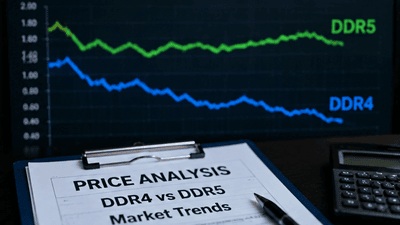
Converging Price Premium Between DDR4 and DDR5: The Switching Window Is Open

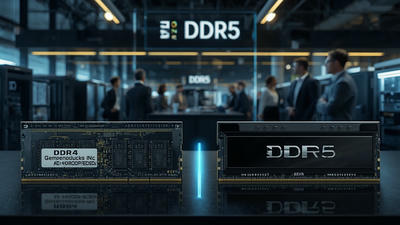
For several years after DDR5 first appeared, its higher price relative to DDR4 kept many buyers on the sidelines. Early adopters paid a clear generational premium for bandwidth, capacity headroom, and future‑proofing, while a large installed base continued to rely on mature DDR4 platforms. Today, that situation is changing. As manufacturing scales, competition intensifies, and platforms standardize around DDR5, the price gap between the two generations has narrowed to the point where it can be “converted” into performance and total‑cost‑of‑ownership (TCO) gains rather than seen as a pure cost penalty.

  • 1
  • 2
  • 3